Why Competitive Mathematics Is Entering a New Era
A student preparing for a mathematics contest can now ask an AI system to generate practice problems, explain a difficult proof, or suggest several ways to attack a problem. That changes preparation before a contest even begins. Help that once required a teacher, textbook, or study group may be available instantly, often at little or no cost.
The change also creates a new tension. AI can produce polished solutions and detect patterns quickly, but those abilities do not necessarily show whether a student understands the underlying ideas or can reason independently under contest conditions. Competitions therefore face questions about what should be measured, how assistance can remain fair, and whether traditional training methods are still enough. The technology expands access to useful support, yet it also makes mathematical judgment, original reasoning, and clear proof more important to identify and develop.
What AI Can Already Do Well
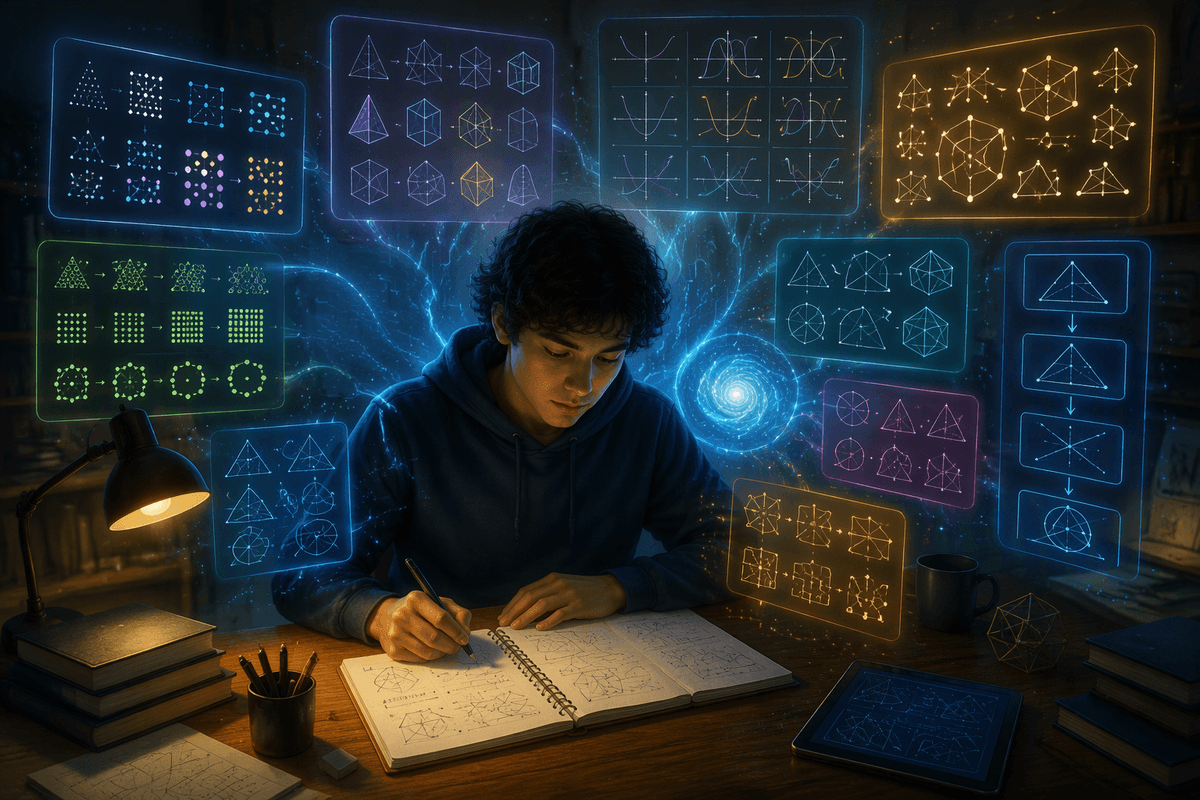
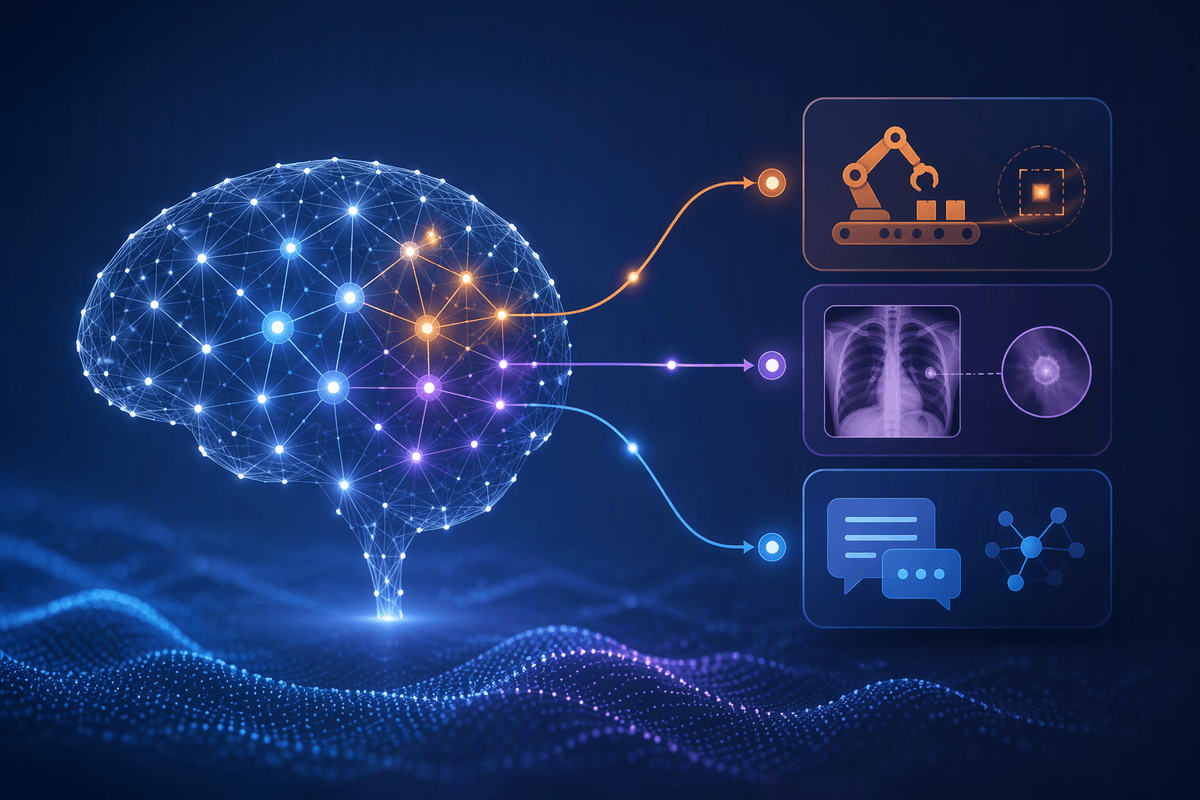
For many students, the most useful change is speed. An AI system can generate dozens of problems at a chosen difficulty, vary the numbers without changing the underlying idea, and provide hints when a solution stalls. It can also check algebra, test small cases, translate a dense statement into simpler language, and compare different solution paths. That makes practice more targeted: a student who repeatedly misses invariant-based problems, for example, can request more problems built around that technique instead of working through a fixed chapter in order.
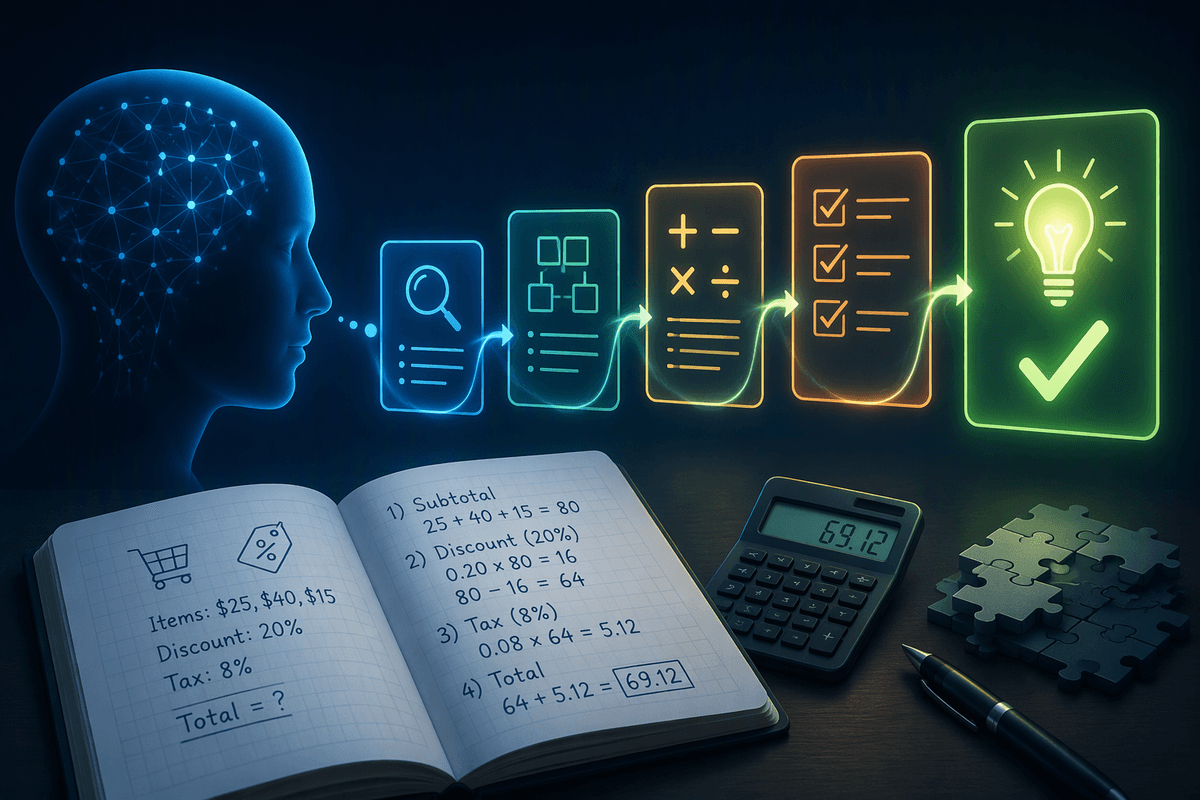
AI is also effective at handling routine exploration. It can list cases, search for patterns, suggest relevant theorems, or turn an informal observation into a possible proof outline. For teachers and coaches, it can help draft worksheets, create extensions for advanced students, and identify several levels of explanation. AI may give a confident but incorrect argument, overlook an important condition, or recommend a method that hides the central insight. Students still need to verify claims, test examples, and decide whether a solution is logically complete rather than merely well presented.
Where Human Mathematical Skill Still Matters
During a contest, the hardest step is often not carrying out a calculation but deciding what deserves attention. A student must notice an unusual structure, choose between several possible approaches, and abandon a promising idea when it leads nowhere. AI can suggest methods, but it does not remove the need for judgment. Strong competitors recognize which details matter, form useful conjectures, and connect a new problem with ideas that may not appear obvious from its wording.
Human skill matters even more when a solution must be explained and defended. A correct answer supported by an invalid step is still a failed proof, and an AI-generated argument may contain exactly that kind of hidden gap. Students need to test edge cases, understand why each claim follows, and present reasoning in a form another person can inspect. The difficult problems often require long periods of uncertainty that no hint can replace. AI may shorten routine work, but developing taste, independence, and proof discipline still takes deliberate practice. That practice can be slower than accepting a polished solution, which is precisely why coaches must make room for struggle rather than treating efficiency as the only measure of progress.
Training Changes When Every Student Has AI
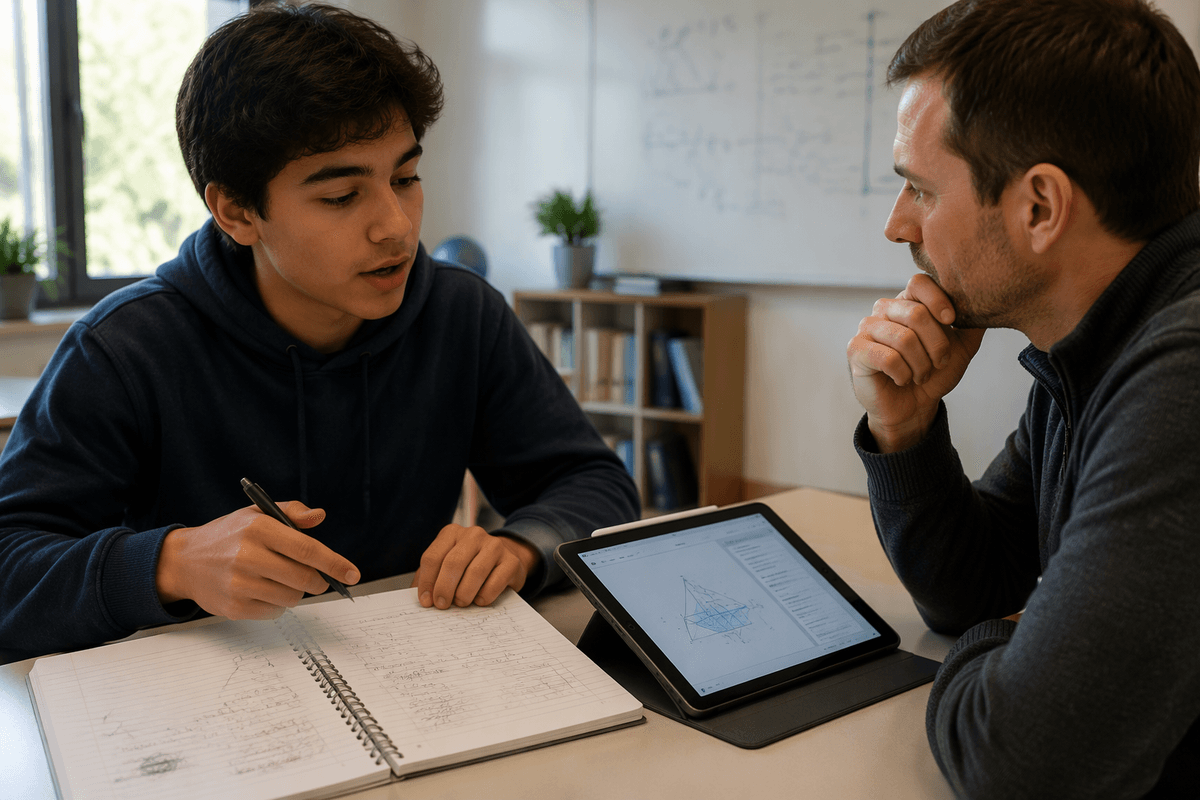
When AI becomes part of every student’s study routine, practice shifts from finding enough material to using help without weakening independent thinking. A student might first attempt a problem alone, then ask for a hint rather than a full solution, and finally explain the argument in their own words. This preserves some of the productive struggle while still making feedback more immediate. Keeping a record of failed approaches can also reveal whether AI is helping the student learn or simply replacing the difficult part.
Coaches may need to design training around that distinction. Assignments can include timed, tool-free sessions, oral explanations, and unfamiliar variations that cannot be solved by copying a familiar template. Students can use AI afterward to compare methods, locate gaps, or generate follow-up problems. The difficulty is practical: verifying AI feedback takes time, and not every school has equal access to reliable systems or skilled guidance. Training may therefore become more personalized for some students while widening gaps for others. The strongest programs will treat AI as a feedback and exploration tool, not as a substitute for sustained reasoning.
The Fairness Problem in AI-Assisted Contests
A contest can feel fair when every student receives the same problems, yet equal rules do not always produce equal preparation. Some students may have fast, reliable AI tools, private coaching, and time to learn advanced prompting techniques, while others may rely on limited school equipment or free services that make mistakes more often. Even when outside assistance is banned during the event, unequal access beforehand can affect who has practiced more efficiently and who has learned to recognize common problem structures.
Contest organizers therefore face a difficult choice. Allowing AI during a competition could test how well students collaborate with mathematical tools, but it would make results harder to compare and could reward access to better systems rather than deeper understanding. Banning every tool is simpler, though enforcing that rule in take-home rounds or online contests can be difficult. A balanced approach may separate goals: use supervised, tool-free rounds to measure independent reasoning, and clearly labeled AI-assisted events to study collaboration. Fairness will depend not only on the rule itself, but also on transparent expectations, comparable access, and assessments that require students to explain and defend their solutions.
How Contests and Coaches May Adapt
Contest organizers may respond by separating the skills they want to measure. A supervised, tool-free round can test independent problem solving, while a separate AI-assisted round can examine how well students question, guide, and verify a computational partner. Online and take-home formats may require recorded reasoning, oral follow-ups, or several intermediate steps so that a polished final answer is not the only evidence of ability. These measures add administrative work, and no system can perfectly prove how much outside help a student received.
Coaches can adapt by making verification and explanation central parts of training. Instead of asking students only for a solution, they might ask which AI suggestions were rejected, where an argument could fail, and how the problem changes when one condition is removed. Practice can alternate between independent attempts, carefully limited tool use, and discussions comparing human and machine approaches. This requires more than learning new software: coaches must judge when assistance supports insight and when it removes the challenge that builds it. The goal is not to preserve every old contest format, but to ensure that results still reveal reasoning, judgment, and mathematical ownership.
Preparing for a Stronger Human-AI Partnership
A stronger partnership begins with clear division of labor. Students can use AI to expand practice, test conjectures, and receive targeted feedback, while reserving important stretches of work for unaided reasoning. Teachers and coaches can model this balance by asking students to document their process, challenge machine-generated claims, and explain solutions without relying on the original prompt. The goal is not to avoid assistance, but to remain responsible for the mathematics.
That approach carries a real cost: careful verification takes time, and access to capable tools remains uneven. Still, the central standard is durable. Whether a solution is produced alone or with technology, mathematical ability should include understanding, judgment, persistence, and the capacity to defend an argument. AI may change how competitors train and explore, but it need not reduce mathematical ownership. Used deliberately, it can make practice broader while leaving the deepest reasoning in human hands.