Why Computing’s Foundations Are Being Reconsidered
For decades, computing followed a relatively stable pattern: people wrote instructions, processors executed them, and memory stored the results. Machine learning changes that arrangement. Instead of specifying every rule, developers often provide examples and let a model discover patterns through training. The shift affects more than applications such as search, recommendations, or image recognition; it changes what the underlying machines must do efficiently.
Modern systems increasingly spend their time moving large datasets, performing repeated mathematical operations, and updating model parameters rather than running varied sequences of conventional instructions. That creates demand for specialized processors, new memory designs, and software that manages uncertainty as well as correctness. The change is substantial, but not unlimited: traditional code, predictable logic, and general-purpose hardware remain essential wherever reliability, low cost, or exact behavior matters most.
From Fixed Instructions to Learned Behavior
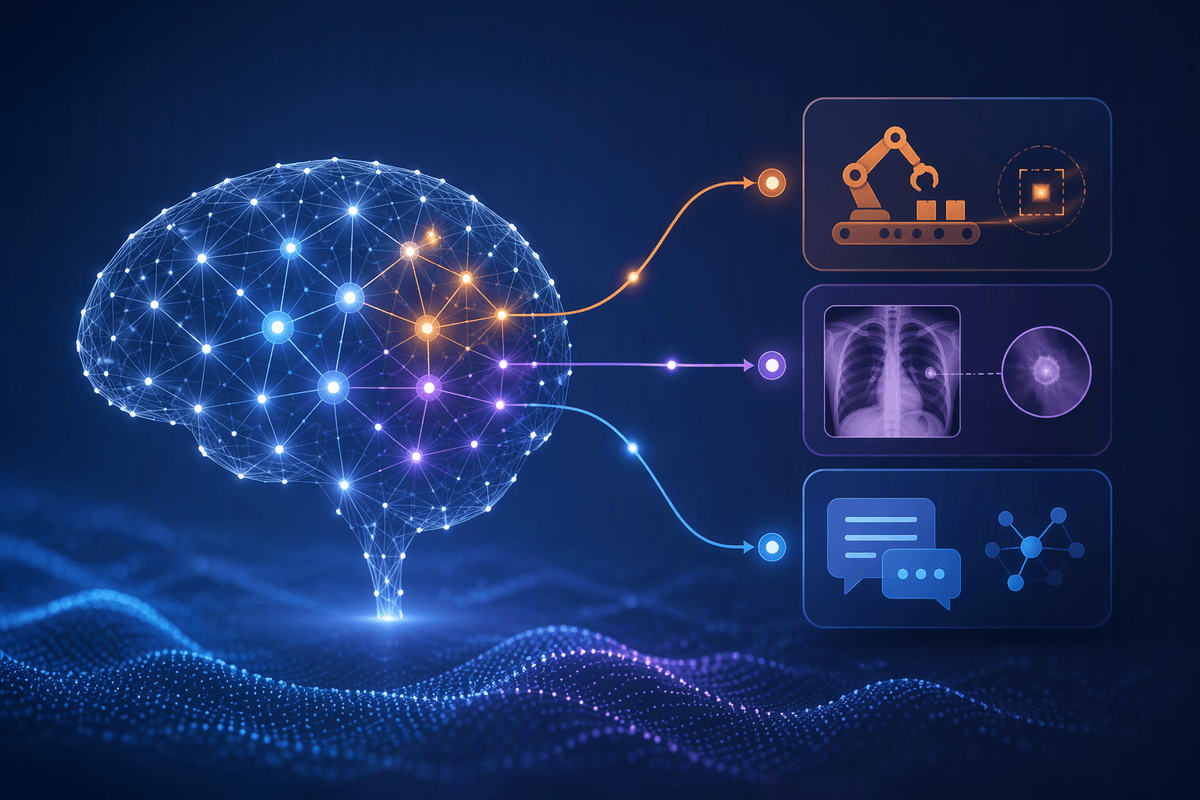
Consider the difference between a calculator and a system that recognizes a handwritten digit. A calculator follows explicit rules: given the same inputs, it applies the same operations in a defined order. A recognition model is built differently. During training, it processes many labeled examples and adjusts internal parameters until useful patterns emerge. When it later sees a new image, it produces a probability rather than applying a short list of visible rules.
This changes the boundary between programming and execution. In conventional software, most behavior is designed directly by people and encoded in source code. In machine learning systems, developers choose the model structure, training data, and objective, but much of the final behavior is shaped by optimization. That can make the system effective in situations where rules are difficult to write, such as interpreting language or detecting defects in photographs. It also introduces new practical problems: results can be difficult to explain, sensitive to the data used for training, and costly to improve because retraining requires substantial computing power.
The New Core: Models, Matrices, and Memory
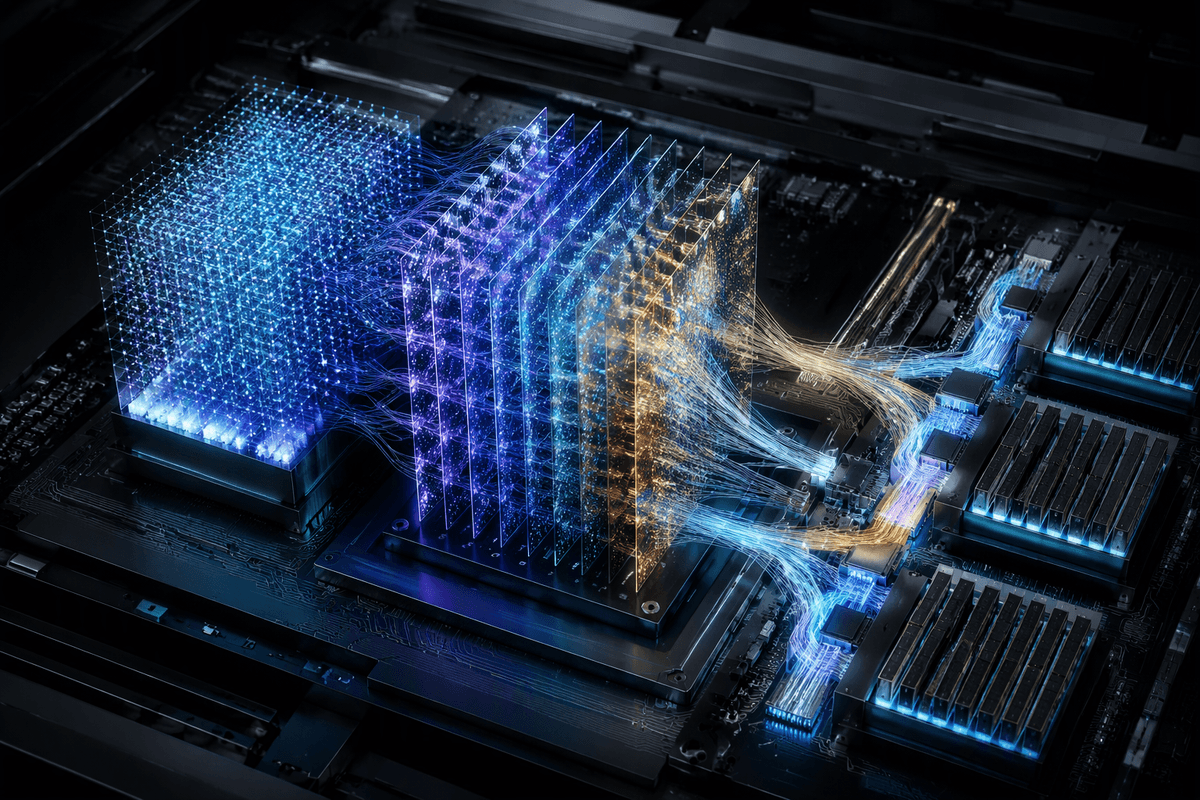
Once behavior is learned rather than fully written down, the central object in a computing system is no longer just a program. It is a model: a large collection of numerical parameters adjusted during training and consulted during use. Those parameters are typically represented as matrices and vectors, allowing the system to transform inputs through many layers of multiplication and addition. The individual operations are simple, but their scale is not. A modern model may require billions of values to be stored and repeatedly processed.
That workload changes what “fast” means. Performance depends less on executing a wide variety of instructions and more on completing huge numbers of similar calculations while moving data efficiently between processors and memory. Graphics processors and dedicated AI accelerators suit this pattern because they can perform many operations in parallel. High-bandwidth memory and specialized data paths become just as important as raw arithmetic capacity.
Larger models can improve capability, but they require more electricity, memory, and time to train or run. Keeping all the needed parameters close to the computation is difficult, especially in phones, vehicles, and other devices with strict space and power limits.
Why General-Purpose Chips No Longer Dominate
A general-purpose CPU remains valuable because it can handle many different tasks, change behavior quickly, and run the operating systems and control logic that hold a device together. But flexibility is not always the same as efficiency. When a workload repeatedly performs the same matrix operations, a CPU may spend energy managing instructions and moving data instead of doing the useful arithmetic. Specialized chips can dedicate more of their circuitry to parallel computation, often delivering higher performance per watt for training and inference.
This does not mean one replacement chip will take over computing. GPUs are well suited to broad parallel workloads, while AI accelerators may target particular model operations, and CPUs still manage irregular tasks that resist this structure. The result is a more mixed architecture: several types of processors share work, with software deciding where each operation should run. That arrangement can improve speed and energy use, but it increases design complexity. Developers must account for memory limits, data-transfer costs, hardware compatibility, and the difficulty of keeping specialized devices fully occupied.
The Hard Constraints Behind the AI Boom
The limits become visible when a model moves from a research lab into everyday use. Training can require large clusters of accelerators running for days or weeks, while deployment may involve millions of requests that each consume memory bandwidth, electricity, and network capacity. A system can be mathematically efficient yet still be expensive if its parameters must travel repeatedly between storage, memory, and processors. For phones, cars, and factory equipment, heat and battery life can matter as much as computational speed.
Hardware supply creates another constraint. Advanced accelerators depend on specialized manufacturing, high-bandwidth memory, and tightly integrated packaging, all of which are costly and difficult to expand quickly. Data also limits progress. More examples do not automatically produce better behavior if they are biased, duplicated, poorly labeled, or legally restricted. Even after a model is trained, testing remains difficult because performance can vary across languages, users, and unusual situations.
These pressures separate durable progress from simple scale. Bigger models may deliver impressive results, but practical systems must balance accuracy against energy, latency, price, privacy, and reliability. Those trade-offs will shape which AI capabilities become ordinary infrastructure and which remain expensive demonstrations.
What Changes for Software and System Designers
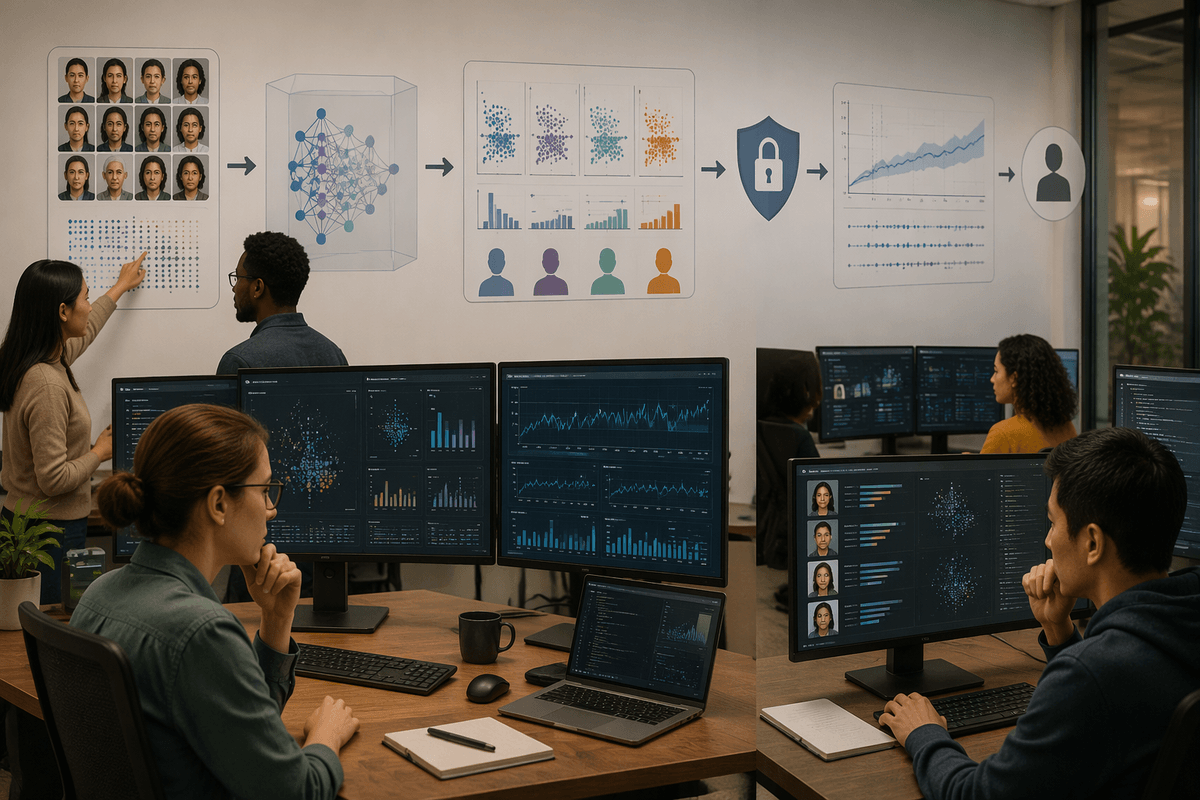
For software designers, the main change is that building a useful system no longer ends with writing code and checking whether it follows its rules. A machine learning component must also be evaluated against representative data, monitored after deployment, and updated when real-world conditions change. Teams may need to measure error rates across different groups, protect sensitive training data, and design ways for people to review uncertain results. Testing becomes less like checking a calculator and more like sampling a changing population of cases.
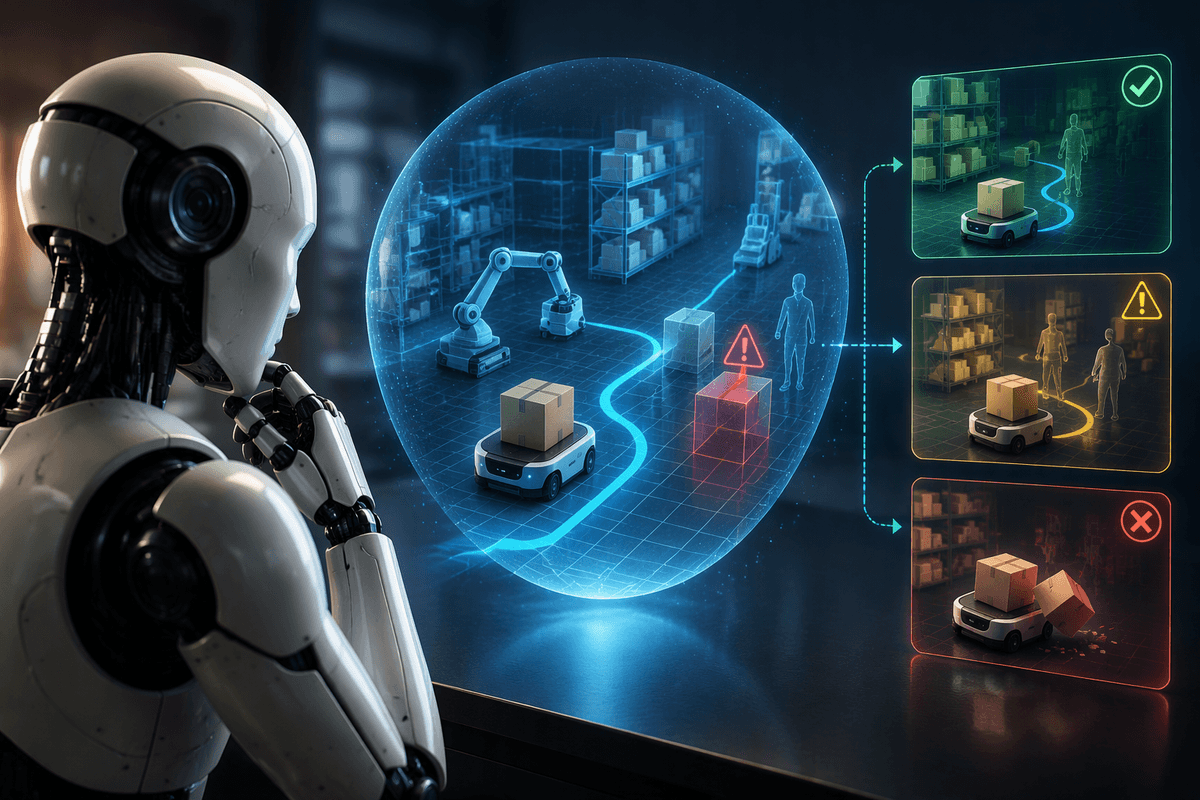
System designers also have to treat hardware and software choices as one problem. A model that works well in a cloud data center may be too slow, expensive, or power-hungry for a laptop or vehicle. Smaller models, compressed parameters, local processing, and staged fallbacks can reduce those costs, but often with some loss of accuracy or flexibility. This encourages architectures that combine learned components with conventional code: the model handles perception or prediction, while explicit software enforces permissions, safety limits, and dependable control. The practical shift is not from programming to AI, but toward systems that deliberately divide responsibility between both.
A More Adaptive—but Less Predictable—Future
A familiar pattern is emerging: future computing systems will combine predictable machinery with components that adapt to examples, changing conditions, and user needs. That flexibility can make software more capable without requiring engineers to anticipate every situation. It can also make behavior harder to inspect. A model may improve after retraining, behave differently with unfamiliar inputs, or produce an answer that is useful but difficult to justify.
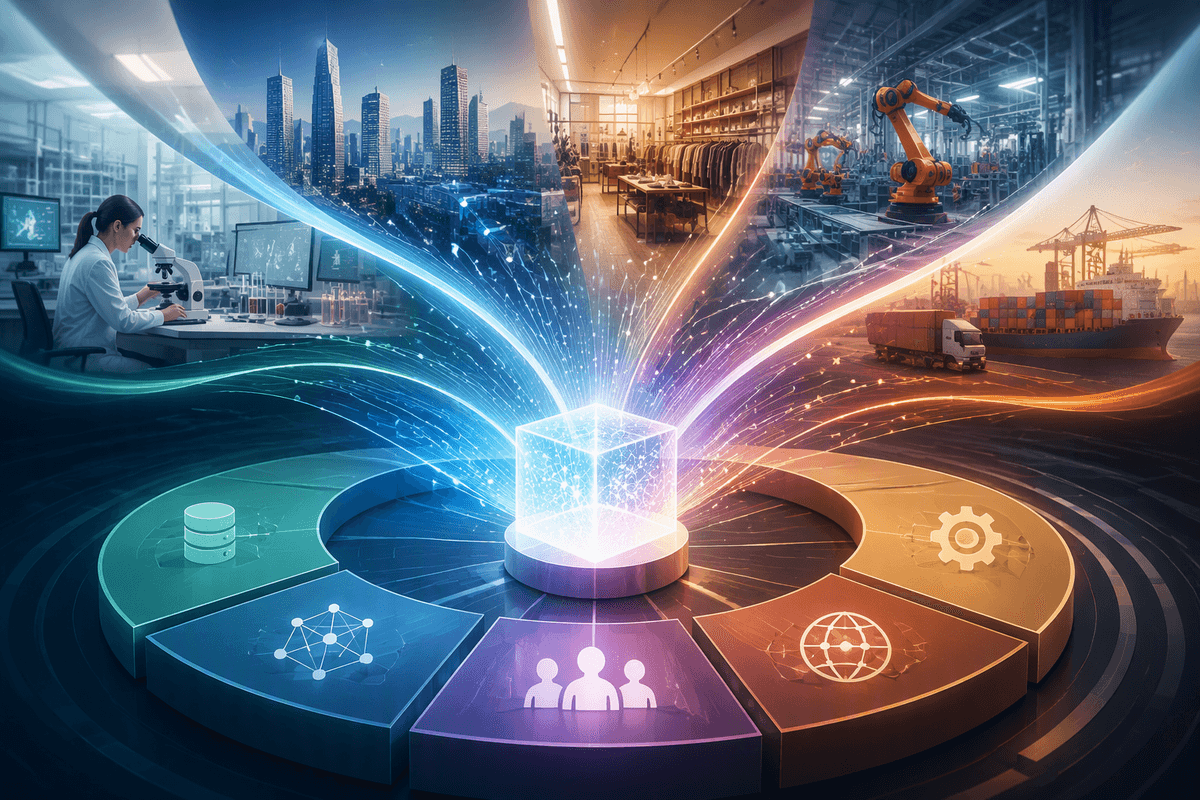
The practical principle is therefore not to replace established computing foundations, but to reorganize them. Specialized hardware, large-scale memory movement, and learned models will matter more, while conventional code will remain responsible for rules, coordination, and safety. The meaningful shift is a division of labor: computing becomes more adaptive at the edges, yet dependable systems still need explicit boundaries, measurable costs, and ways to detect when adaptation has gone too far.