Why Today’s AI Still Learns Poorly
A modern AI system can recognize faces, summarize documents, or generate convincing prose, yet still learn in a narrow and expensive way. Most systems require enormous datasets and repeated training before they can perform reliably. When conditions change—a new camera angle, unfamiliar wording, or a task that combines old skills—the system may fail in ways that seem surprising to people. It often detects patterns without building a flexible understanding of what those patterns mean.
Models typically adjust vast numbers of parameters by processing examples, then depend on similar examples when they are deployed. That approach can produce impressive performance, but it consumes substantial computing power and offers limited ability to learn continuously from small amounts of experience. Researchers are therefore exploring alternatives that could help machines form more reusable knowledge, adapt faster, and rely less on brute-force training.
The Limits Hidden Behind Impressive Performance

A model can score highly on a benchmark while still learning very little from each example. If a system is trained on millions of labeled images, for instance, a new image may be easy only because it resembles patterns already present in its training data. Its success says less about whether it can identify the underlying rule, explain an unfamiliar case, or transfer the lesson to another setting. Benchmark results can therefore hide how much repetition and specialized preparation the task required.
The cost becomes clearer when the environment keeps changing. A fraud detector must adjust to new behavior, a household robot must cope with unfamiliar rooms, and a language system may encounter instructions unlike anything in its data. Retraining such systems can require fresh datasets, extensive computation, and careful testing to prevent older abilities from being lost. The central weakness is not simply that current models make mistakes. It is that they often improve by accumulating more examples rather than by extracting compact principles that can be reused. That makes learning slower, more expensive, and less flexible than the results alone suggest.
A Different Model of Machine Learning
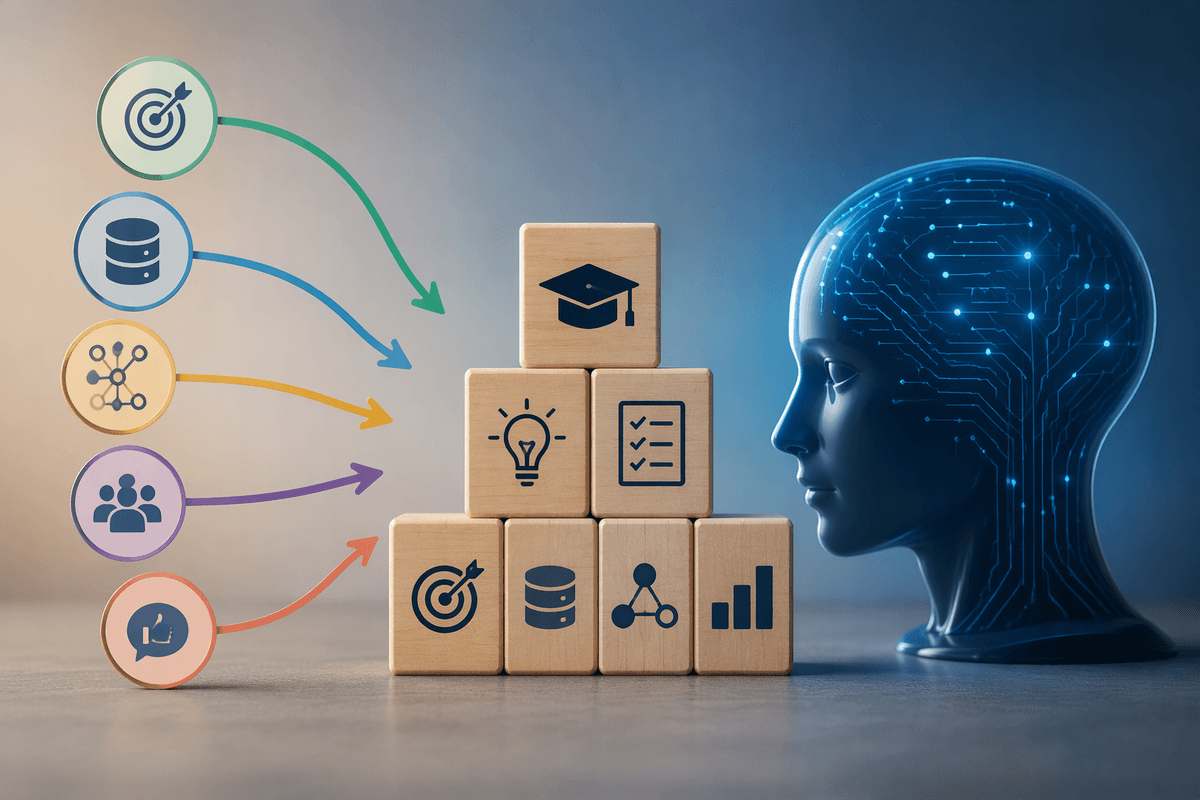
One alternative begins with a different question: instead of asking a model to absorb more examples, can it learn the relationships that make those examples meaningful? A system might represent objects, actions, and consequences separately, then combine them when it meets a new situation. For example, learning that a cup can be filled, lifted, or placed on a table could be more useful than memorizing thousands of pictures of cups. The goal is a compact internal model that supports reasoning, prediction, and transfer.
This approach may involve learning through interaction rather than relying only on labeled data. The system forms a guess about how its surroundings work, tests that guess, and updates it when the result differs from its prediction. It could then learn from a small number of informative experiences instead of treating every example as an isolated adjustment. Such a model would not eliminate training costs or guarantee human-like understanding; building useful representations and deciding which experiences matter are difficult engineering problems. But it changes the emphasis from storing patterns to discovering reusable structure, offering a possible route toward machines that adapt without being rebuilt from scratch.
How Researchers Test Better Learning
A proposed learning method is only convincing if it succeeds under tests that expose more than pattern matching. Researchers may train a system on one set of objects, rules, or environments, then alter the surface details and see whether it can apply the same principle. A robot might learn that an object falls when released and then face objects of different shapes or sizes. A language model might be given a new task using familiar concepts but unfamiliar wording. These tests measure transfer, not just performance on examples that resemble training data.
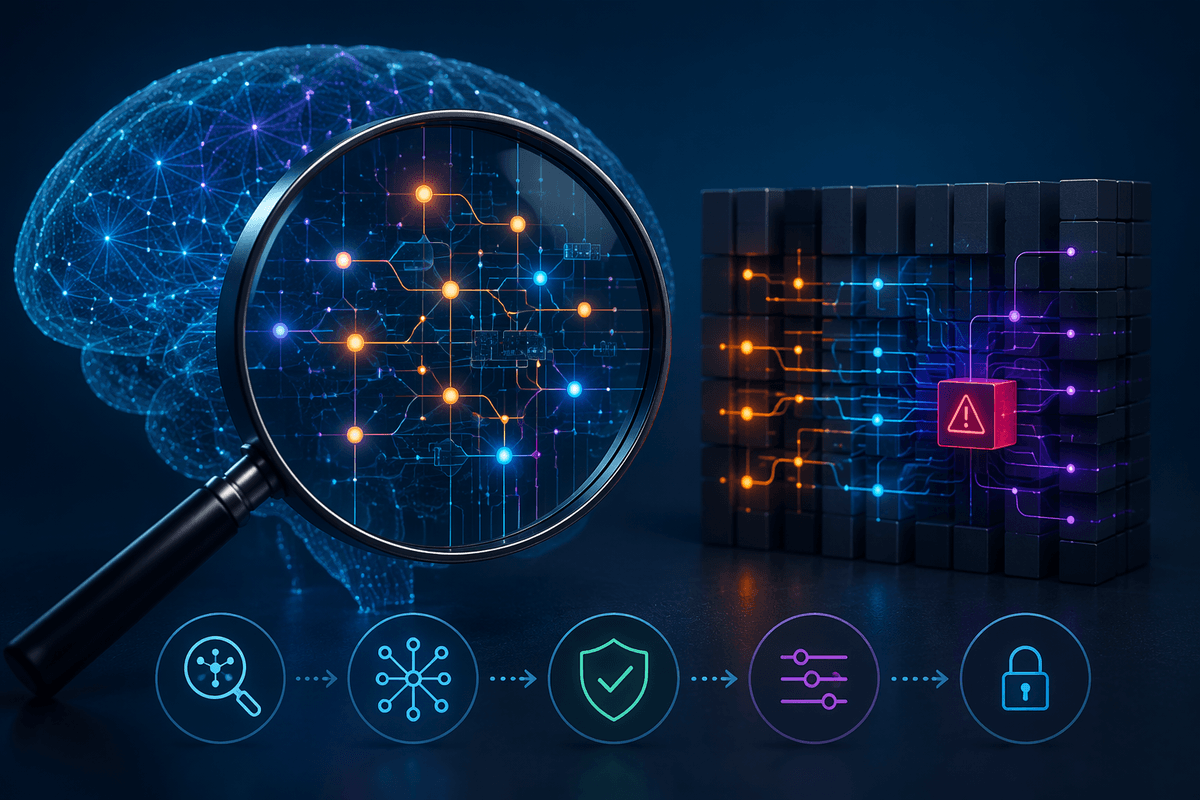
Researchers also examine how much experience and computation the system needs. A method that reaches the same accuracy with fewer examples may be more efficient, even if it does not achieve the highest score. Other tests ask whether learning one skill damages older abilities, whether the system can explain or predict its choices, and whether its internal representations remain useful across tasks. Designing fair comparisons is difficult because improvements may come from better data, larger hardware, or carefully chosen benchmarks rather than from the learning method itself. Strong evidence therefore requires varied environments, controlled experiments, and tests that reward adaptation instead of memorization.
Where the Approach Meets Practical Constraints
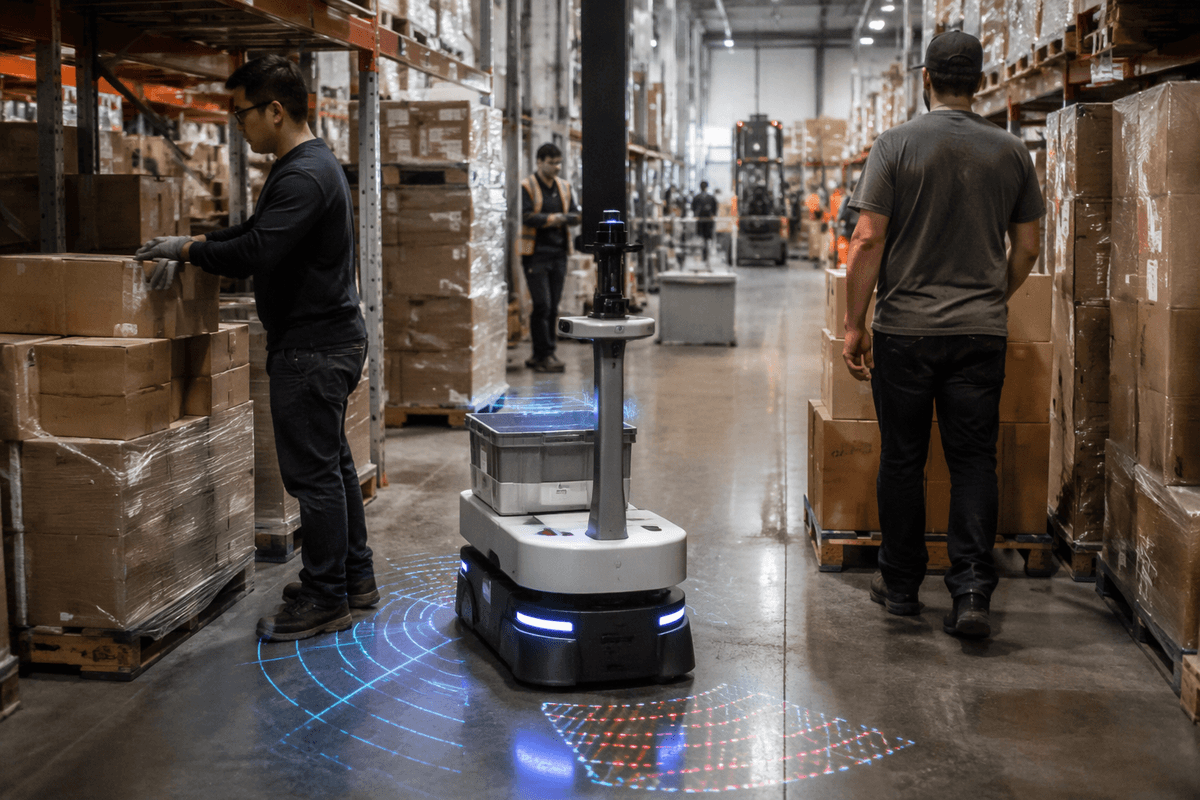
The learning system may transfer knowledge well in a controlled experiment and still face difficult limits outside the lab. Building useful internal representations requires data that captures meaningful variation, not just more examples. An interactive system also needs opportunities to act, observe consequences, and recover from mistakes. Those opportunities can be expensive or unsafe: a robot cannot freely test every decision in a crowded warehouse, and a medical system cannot learn by experimenting on patients.
A model that updates continuously may adapt to new conditions, but it can also absorb misleading information, reinforce errors, or lose skills that were learned earlier. Storing and processing richer representations may reduce the amount of training data required while increasing the system’s computational and design complexity. Researchers must therefore show not only that an approach learns more efficiently, but that it remains stable, understandable, and economical when deployed. These constraints do not erase the promise of better learning, but they shift the standard of success from an impressive demonstration to dependable performance under changing conditions.
What Better-Learning AI Could Change
If better-learning systems can extract reusable rules from limited experience, the effects would appear first in settings where conditions change faster than datasets can be rebuilt. A warehouse robot could adapt to rearranged shelves, a navigation system could handle unfamiliar roads, and a language assistant could learn a company’s procedures from a small number of examples. These systems would not need to treat every new situation as a completely separate problem.
The broader gain would be efficiency. Training could require less labeled data, less repeated computation, and fewer full retraining cycles. That could make capable AI more accessible to smaller organizations and allow systems to operate in places where constant cloud access is impractical. It might also improve safety if models could represent uncertainty, predict consequences, and recognize when a new situation falls outside what they understand.
Still, better learning would not automatically produce general intelligence. A system that transfers knowledge well could remain weak at judgment, communication, or social context. The most useful change may be more modest but consequential: AI that learns skills as connected pieces of knowledge, then adapts those skills without discarding everything it already knows.
The Bigger Question Behind the Research
The deeper question is not whether machines can achieve higher scores, but what it means for a system to learn at all. If learning mainly means adjusting parameters after exposure to vast amounts of data, then progress will remain tied to scale, cost, and repeated retraining. If it means building models of relationships that support prediction and transfer, researchers may be pursuing a more durable foundation for intelligence.
That possibility should be judged carefully. Better representations will not remove the need for data, computation, testing, or human oversight. They could, however, change what improvement depends on. The most important advance may be an AI system that learns fewer facts more deeply, recognizes when its knowledge does not apply, and turns limited experience into abilities that remain useful when the world changes.