A New Map Beyond Familiar Brain Regions
Most brain maps begin with familiar landmarks: the hippocampus, amygdala, or motor cortex. But these large regions contain many kinds of cells, arranged in local patterns that can differ from one neighborhood to the next. When researchers measure thousands or millions of cells at once, AI can compare their molecular features, shapes, and connections, then group cells that share a distinctive profile. The result may reveal boundaries that traditional anatomy overlooked.
These newly identified neighborhoods are not automatically brand-new organs or proven functional centers. They are candidate regions defined by patterns in data, much like an unfamiliar district emerging on a detailed satellite map. Their importance depends on whether other evidence—such as neural connections, activity, or behavior—supports the divisions.
Why Brain Maps Have Always Been Incomplete
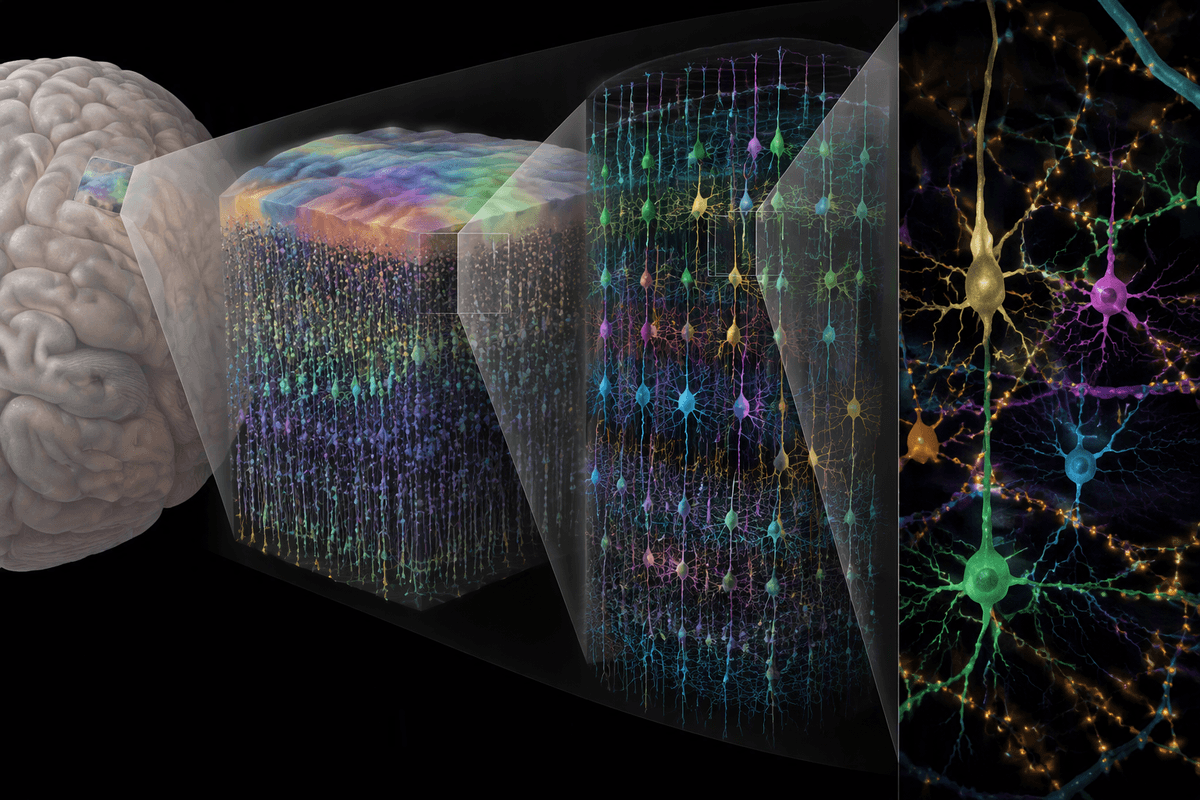
The limits of older brain maps begin with the tools used to make them. Early anatomists worked with what they could see through a microscope: broad structures, visible layers, and changes in cell density. Later methods added electrical activity, chemical markers, and long-range connections, but each approach highlighted only part of the picture. A boundary that looks clear under one measurement may fade under another.
A region labeled as the “visual cortex,” for example, can contain cells with different shapes, gene activity, input sources, and roles in processing information. Averaging those differences makes a map easier to read, but it can hide smaller subdivisions. Modern experiments produce far more detail, yet the data are not automatically easy to interpret. Samples may come from limited areas, different animals, or different stages of development, and technical noise can resemble a genuine biological pattern. AI helps sort through this complexity, but its divisions remain hypotheses until researchers test whether they correspond to stable anatomy and meaningful activity.
How AI Turns Cell Data Into Geography
The process often begins with a table rather than a picture. Each row represents a cell, while columns record features such as active genes, chemical signals, shape, location, or connections with other cells. AI systems compare these profiles, looking for cells that resemble one another and for gradual changes across physical space. A cluster might contain cells with a shared molecular signature; if those cells also appear next to one another, the pattern can be projected onto a brain image as a potential neighborhood.
Researchers can then use algorithms to build a “cellular geography” from many overlapping measurements. One dataset may describe gene activity, another cell shape, and a third connectivity. Combining them can sharpen a boundary that was barely visible in any single source. The system may also identify transitional zones, where one cellular community blends into another rather than stopping at a clean line. That flexibility matters because brain organization is often more like a changing landscape than a set of sharply bordered rooms. The result depends on sampling, measurement quality, and the choices built into the algorithm. Different methods can divide the same territory differently, so computationally distinct neighborhoods still require biological testing.
What Makes a Brain Neighborhood New?
A brain neighborhood becomes genuinely interesting when several kinds of evidence point to the same place. A molecular cluster alone may reflect a temporary state, a technical artifact, or the way an algorithm was instructed to group cells. But if cells with that signature occupy a consistent location, form a recognizable layer or boundary, connect with particular partners, and appear across multiple samples, the case for a distinct neighborhood grows stronger.
“New” therefore does not always mean that researchers have found a completely isolated region. It may mean they have separated a familiar area into smaller subdivisions, recognized a gradual transition as a meaningful zone, or discovered a cell community that older methods blurred together. The distinction matters because biological boundaries are rarely perfect. A neighborhood can overlap its neighbors, change with age or experience, or contain several functional roles. AI can make the pattern visible, but it cannot decide by itself whether the division matters to perception, movement, memory, or disease. That judgment requires experiments that connect the map to anatomy, neural activity, and behavior.
From Cell Clusters to Possible Functions
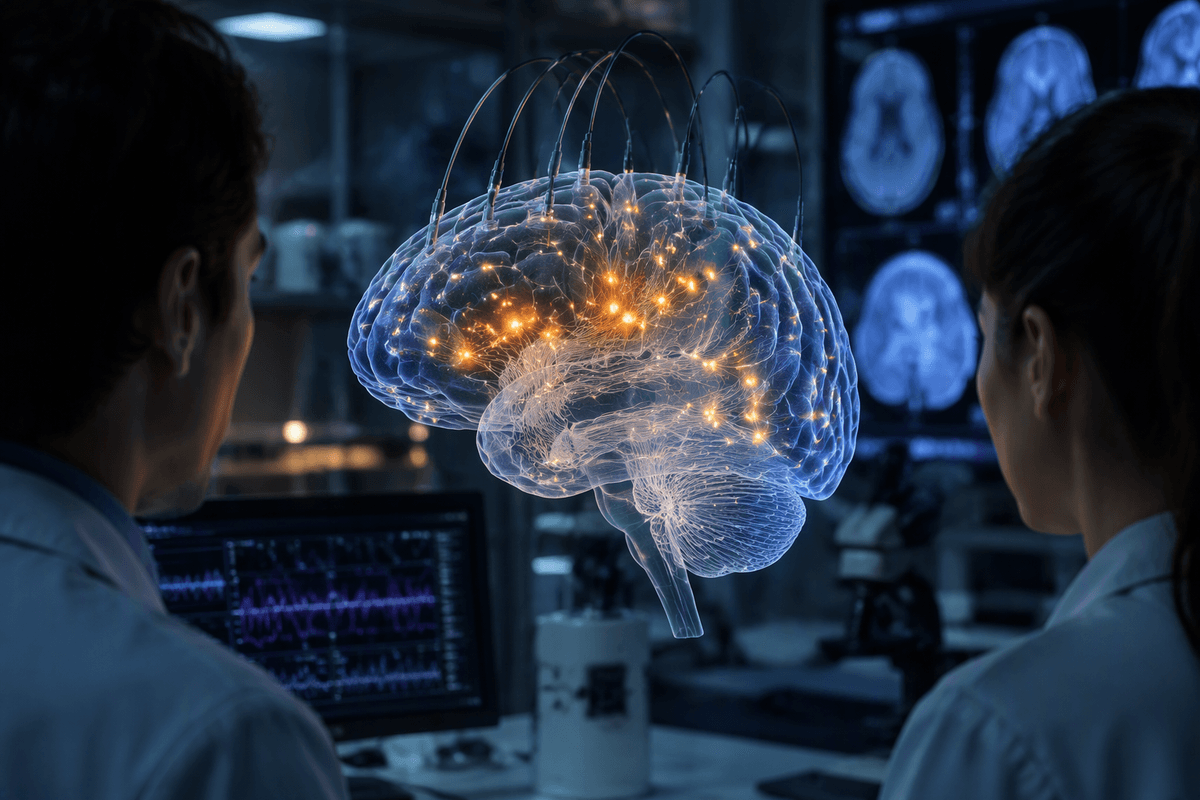
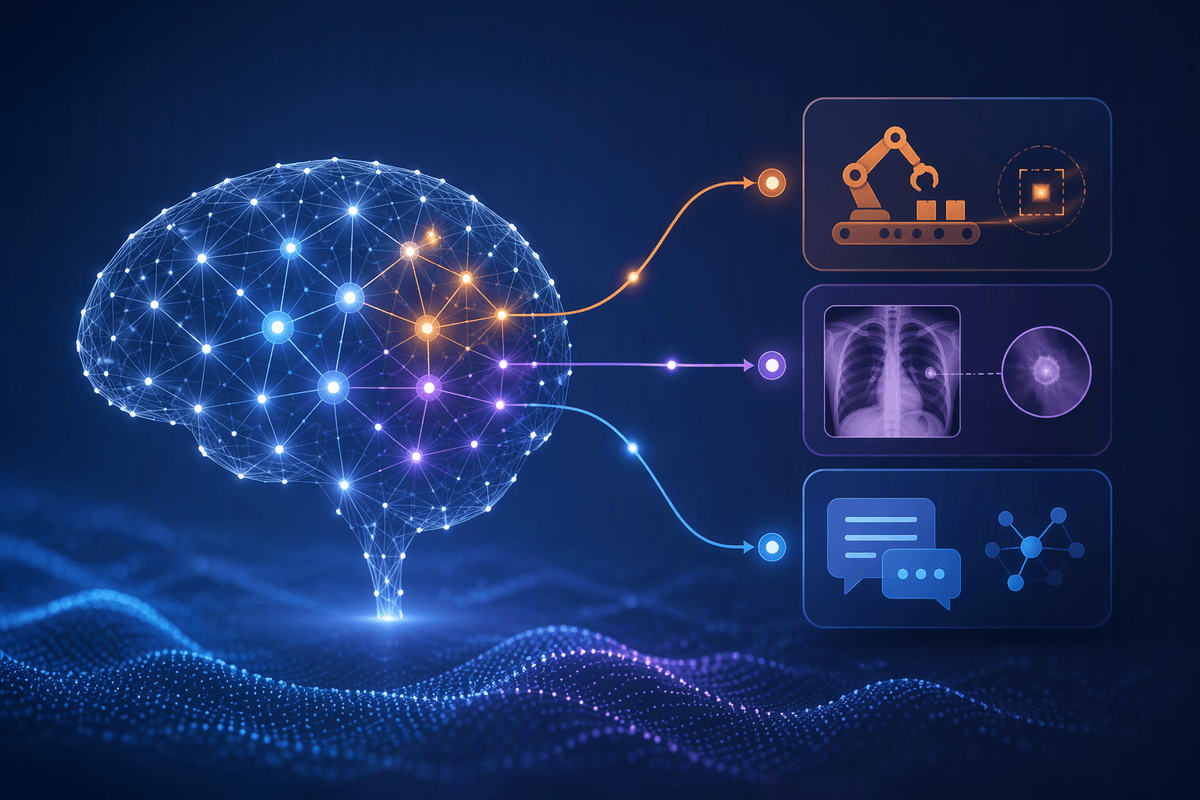
Once a cell cluster has a stable location, researchers can ask what it might do. Its gene activity may suggest the chemicals it uses or the signals it can receive. Its shape and connections may indicate whether it gathers information, sends commands, or helps regulate nearby circuits. For example, a neighborhood rich in cells linked to sensory input might help refine incoming signals, while one connected to movement-related areas could help coordinate actions. These clues narrow the possibilities, but they do not establish a function on their own.
The strongest inferences come when the map is compared with living brain activity. If a neighborhood becomes active during a particular task, responds to a specific stimulus, or changes when a behavior is disrupted, its biological role becomes more plausible. Even then, function may be distributed across several neighborhoods rather than contained in one. A computational map can reveal where to look and which cells to test, but experiments remain necessary. Recording activity, altering selected cells, or tracing their connections takes time and may be difficult in humans, so the path from a visible cluster to a functional explanation is rarely immediate.
The Map Still Needs Ground Truth
A map becomes convincing only when it survives checks outside the dataset that produced it. Researchers may look for the same neighborhood in different animals, individuals, laboratories, or measurement systems. They can stain tissue to see whether the predicted boundary appears under a microscope, trace connections to confirm that the cells communicate with expected regions, or record activity to test whether the neighborhood responds in a distinctive way. Agreement across these tests helps separate a durable biological feature from a pattern created by sampling or software settings.
That verification is difficult because no single form of ground truth is perfect. Brain tissue can change during preparation, cell markers can vary with age or stress, and human samples are limited compared with data from laboratory animals. An algorithm may also produce a neat boundary where biology offers only a gradual shift. Researchers therefore compare maps, repeat analyses, and test predictions rather than treating the first division as final. The practical value of AI is not that it replaces these experiments. It helps identify promising places to investigate, reduces the amount of data researchers must inspect by hand, and exposes relationships that might otherwise remain hidden. The meaning of a new neighborhood emerges only when independent evidence connects its location to stable structure or measurable function.
A More Detailed Atlas, Not a Final Answer
For readers, the main shift is not that AI has finished the brain’s map, but that it has made the map more detailed and testable. A familiar region may contain several cellular neighborhoods, each with different connections or chemical profiles. Those distinctions can guide research into development, aging, and disease, especially when a condition affects one cell community more than its neighbors.
A map built from sampled tissue cannot capture every moment, individual, or interaction in a living brain, and a statistically clear cluster may still have no separate role in behavior. The most useful atlas is therefore a working guide: precise enough to suggest new questions, cautious enough to expose uncertainty, and flexible enough to change when experiments provide better evidence. AI can reveal where the brain’s hidden structure may lie, but biology determines which patterns truly matter.