Why Generative AI Starts With Noise
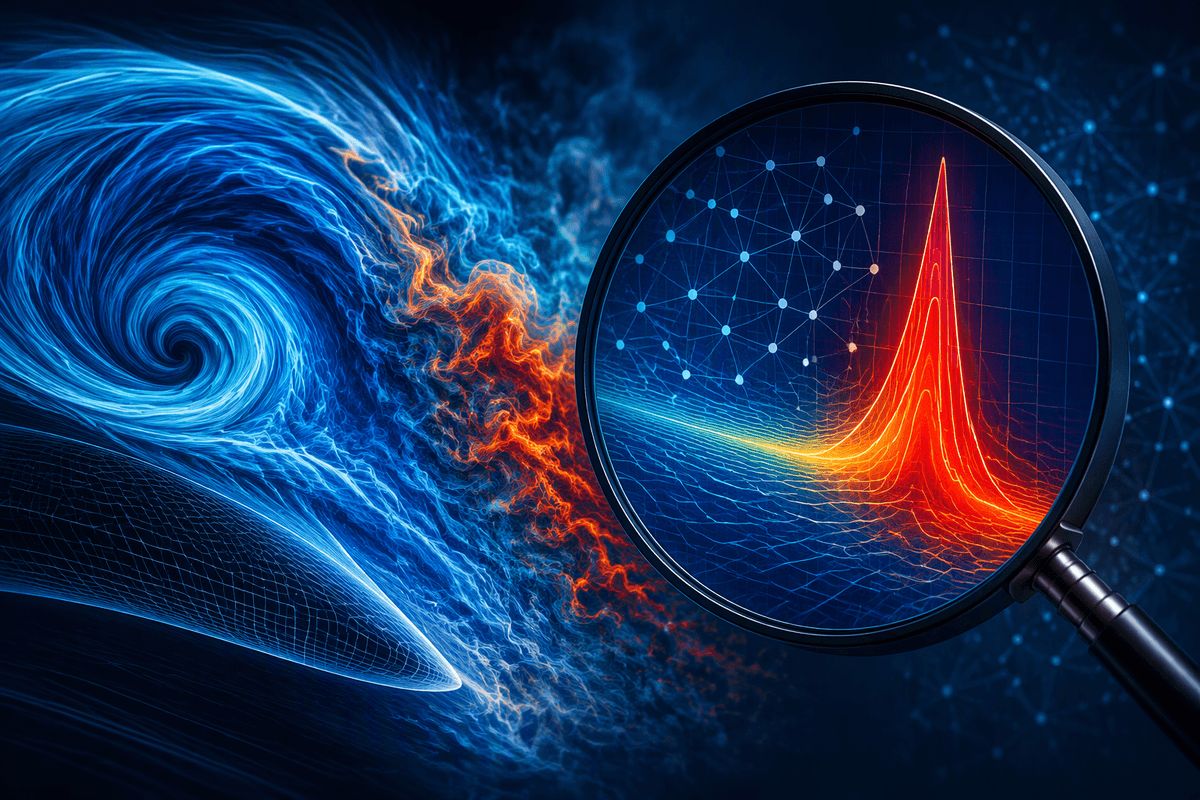
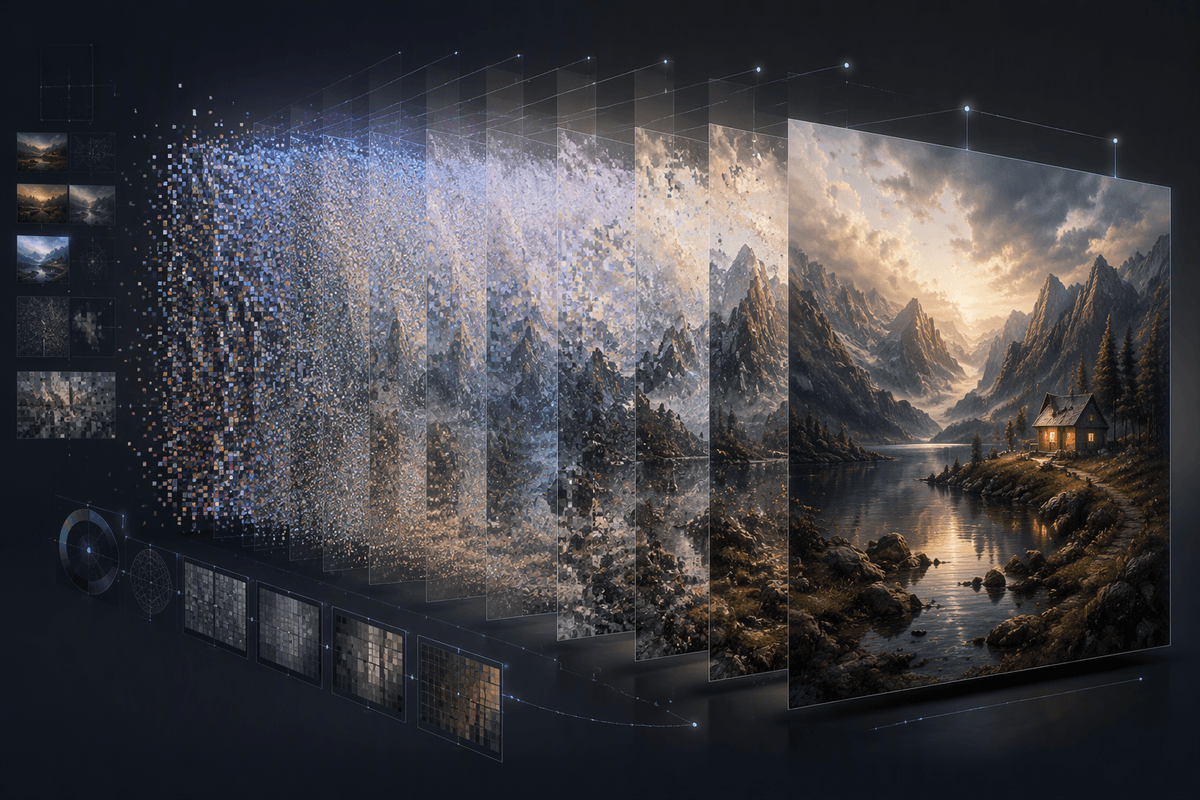
When an image generator begins with a blank-looking field of static, it is not choosing pixels at random and hoping something recognizable appears. The noise is the starting material for a controlled transformation. During generation, the system repeatedly adjusts that pattern until shapes, textures, lighting, and other visual relationships emerge. Each step makes the result slightly less uncertain.
This differs from software that retrieves a stored image or follows a fixed set of drawing instructions. A diffusion model has learned statistical relationships from many examples, but it does not keep a complete copy of the requested picture. Starting from noise gives it room to produce a new arrangement that matches the prompt. The process also explains an important trade-off: greater flexibility comes from repeated computation, so generating a result can require more time and computing power than simply displaying existing data.
The Physical Idea Behind Diffusion Models
The underlying idea comes from a familiar physical process: diffusion. Put a drop of ink in clear water, and its concentrated shape gradually spreads until the color is distributed throughout the container. The change is easy to observe in one direction, but difficult to reverse perfectly. Diffusion models use a mathematical version of this pattern. During training, they take an existing image and add small amounts of noise over many steps, steadily turning recognizable structure into something closer to random static.
The model then learns the opposite operation: how each level of disorder is likely to have developed from a less noisy image. It does not simulate atoms moving through liquid, and no physical material is involved. The “physical” connection is a useful analogy expressed through probability and computation. At each step, the model estimates which changes would make the noisy pattern more consistent with learned examples. Because the process is gradual, it can recover broad forms before fine details. That staged reversal distinguishes diffusion from a conventional program with fixed rules, but it also creates a practical cost: producing an image usually requires many successive calculations rather than one direct lookup.
Training the Model to Reverse Disorder
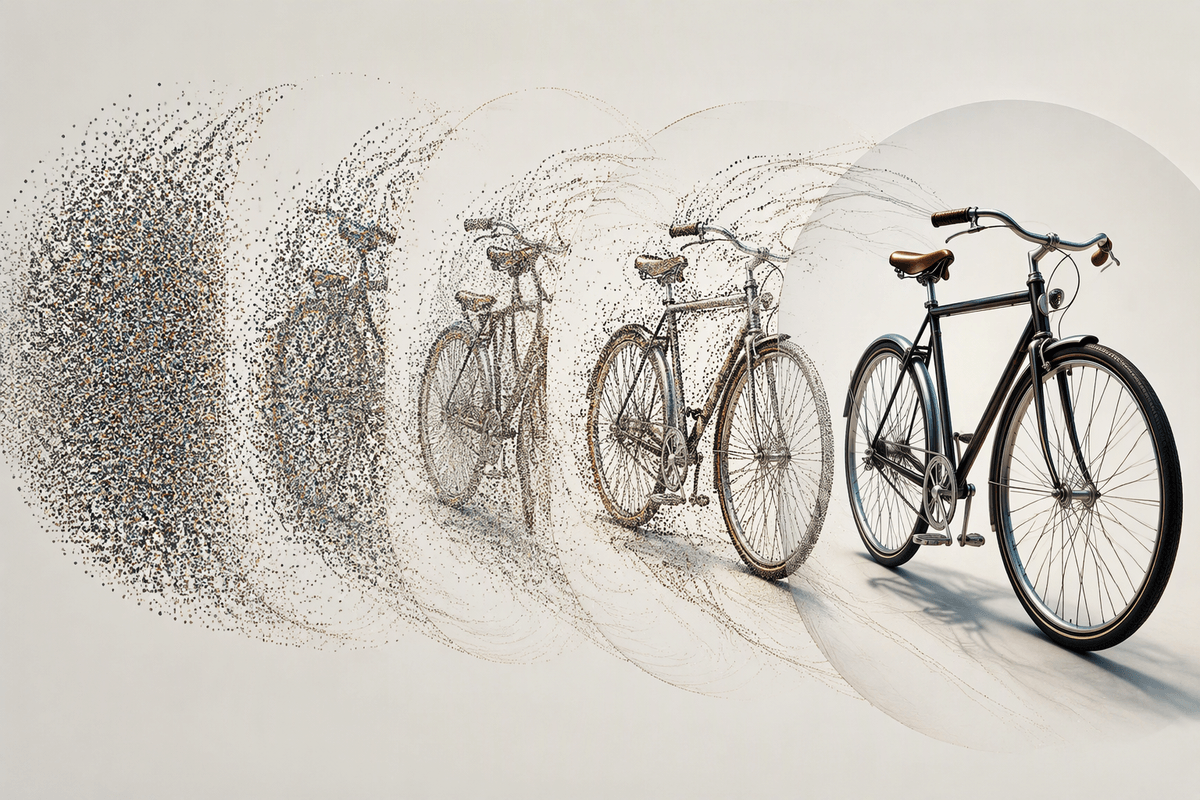
Training begins with an ordinary image, such as a photograph of a bicycle. The system adds a known amount of noise to it, then asks the model to predict what was added or what the cleaner image should look like. It repeats this exercise at many noise levels, from a lightly corrupted image to nearly pure static. Each prediction is compared with the known answer, and the model’s internal settings are adjusted to reduce the error. After enough examples, it learns patterns such as edges, textures, object shapes, and the ways noise obscures them.
The model is not memorizing a single recipe for every picture. It is building a probability-based understanding of how visual structure tends to appear at different stages of degradation. Text prompts or other conditions guide that learned process by indicating which patterns are more relevant. Training is expensive because it requires large datasets, specialized hardware, and repeated calculations across many examples. Even so, the result is more adaptable than a fixed image-making procedure: the same learned reverse process can begin with different noise and produce varied outputs while remaining connected to the requested subject.
From Randomness to a Coherent Result
At generation time, the model starts with a pattern that contains little usable structure. A prompt such as “a red bicycle beside a lake” does not cause the entire image to appear at once. Instead, the prompt influences each denoising step, making some arrangements of shapes and colors more likely than others. Early steps establish broad composition: where the bicycle might sit, where the horizon could fall, and which regions should contain sky, water, or land. Later steps refine edges, materials, shadows, and small visual details.
This gradual process resembles making a rough sketch and then adding layers of definition, although the model is calculating probability distributions rather than drawing with a pencil. At every stage, it balances two signals: the current noisy image and the conditions supplied by the prompt. Different initial noise patterns can lead to different results, even when the wording stays the same. That variability is useful for exploration, but it also means the system cannot guarantee exact placement or consistent details. A prompt may identify the subject correctly while leaving its hands, text, or spatial relationships imperfect.
Why This Approach Changed Generative AI
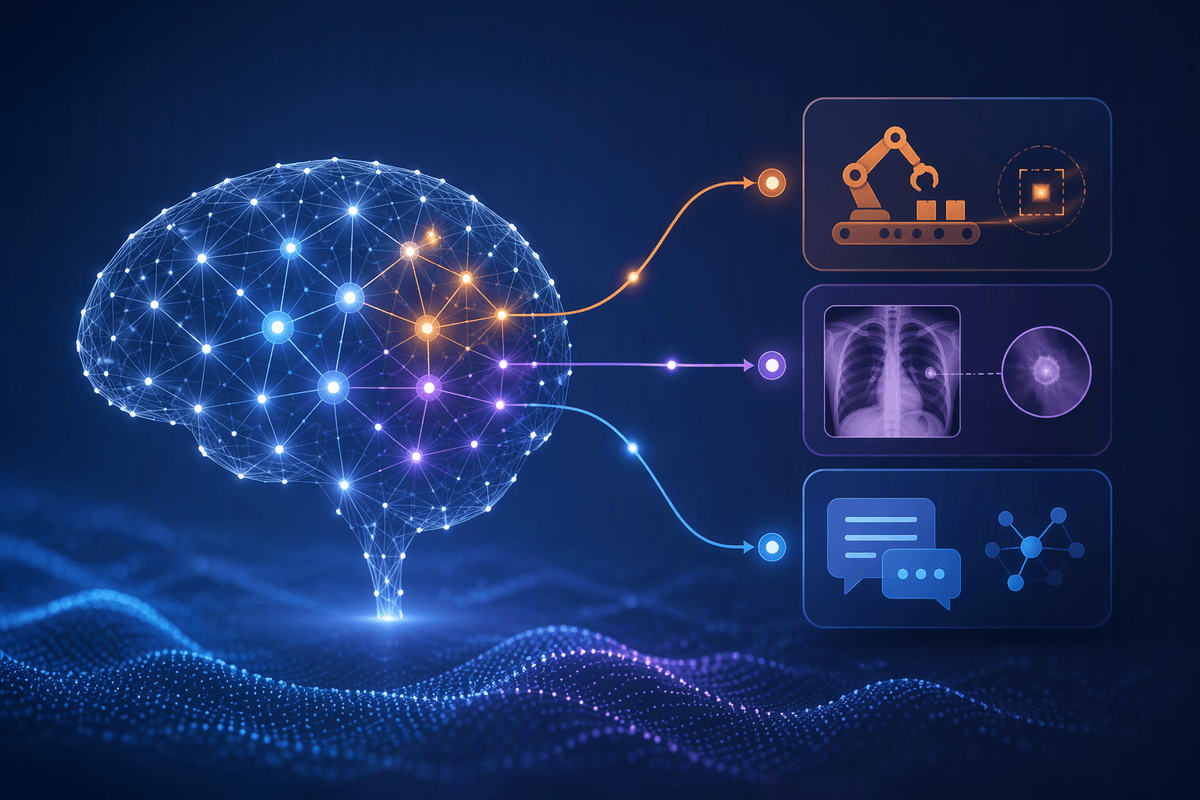
The practical breakthrough was not simply that diffusion models could generate images, but that they offered a flexible way to represent visual knowledge. Instead of mapping an input directly to one fixed output, the model learns a landscape of possible images and uses conditions such as text, sketches, or reference pictures to navigate it. That makes the same underlying system useful for many tasks: creating variations, filling missing regions, changing styles, enlarging images, or translating one visual arrangement into another.
This flexibility also made diffusion models easier to improve and adapt than many earlier generative approaches. Their step-by-step process gives developers several points where guidance can be added or adjusted, while the gradual reconstruction tends to produce detailed textures and coherent overall structure. A model may need substantial training data and computing power, and generation remains slower than a single forward prediction. It can also reproduce biases or visual patterns present in its training material. Even with those limits, turning generation into controlled reconstruction made complex image synthesis more accessible and opened a path toward creative tools that respond to ordinary language.
The Limits Hidden Inside the Process
The same gradual process that gives diffusion models flexibility also creates predictable weaknesses. Because the image is assembled through many probabilistic corrections, small errors can survive or compound across steps. A person may have an extra finger, a sign may contain unreadable lettering, or two objects may merge in an impossible way. The model can produce a convincing surface without understanding the scene in the human sense. It recognizes patterns associated with “bicycle,” “lake,” or “hands,” but it does not reliably track physical rules, ownership, or precise spatial relationships.
Changing a prompt slightly can alter details that were meant to remain fixed, while using the same prompt can produce different results because the starting noise changes. Reaching a particular composition may therefore require repeated attempts, careful settings, or extra reference images. The computation itself has a cost: many denoising steps consume time, memory, and electricity, especially at high resolutions. These limits matter because they show that diffusion is not a shortcut to understanding. It is a powerful method for generating plausible possibilities, but human judgment is still needed to check accuracy, structure, and meaning.
A New Creative Tool Built From Disorder
For a designer, writer, or researcher, the practical value of diffusion is not that it replaces judgment. It makes iteration cheaper and more open-ended. A rough description, sketch, or reference image can become a starting point for several visual directions, allowing a person to compare possibilities before committing time to one. The model’s disorderly beginning becomes useful because it prevents every result from following the same fixed path.
That creative freedom works best when the system is treated as a collaborator rather than an authority. Users still need to define goals, refine prompts, inspect details, and correct errors that the model cannot recognize. Diffusion models therefore matter less as artificial artists than as new interfaces for exploring learned visual patterns. They turn randomness into a workable design space—one that can expand human options, provided its speed and fluency are balanced with verification and control.