Why Small Tasks Expose Big Weaknesses
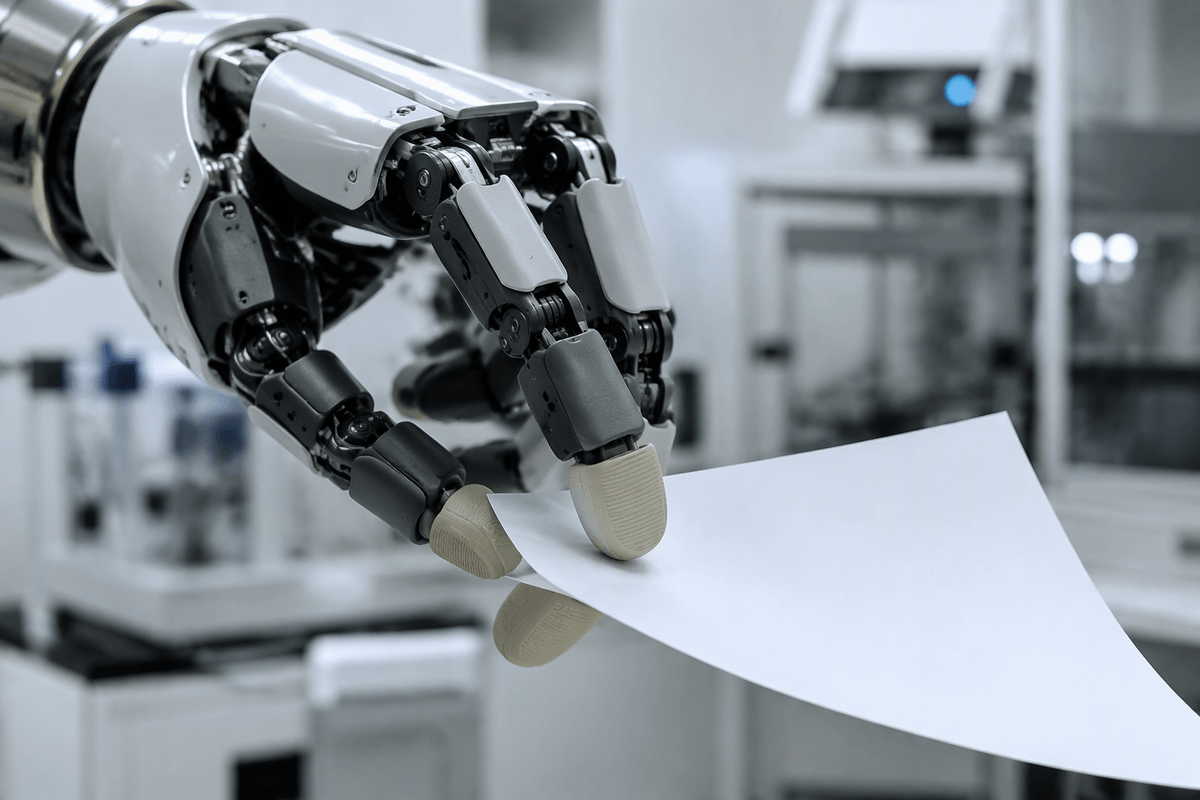
A robot may walk across a stage, keep its balance, and place an object exactly where expected, yet still struggle to pick up a loose coin or open a partly stuck drawer. These tasks look minor because people perform them without conscious planning. For a robot, they combine several demanding problems: identifying the object, estimating its position, controlling contact forces, and adjusting when the object moves or resists.
Small household tasks leave little room for error and rarely follow a fixed script. Lighting changes, surfaces vary, and objects are often damaged, flexible, or misplaced. A demonstration can avoid these complications; dependable performance must handle them repeatedly, at acceptable speed and cost.
The Real Challenge Is Seeing What Matters
Before a robot can move a hand, it must decide what the hand is looking at. That sounds obvious until the scene includes a shiny spoon, a crumpled wrapper, or a cable partly hidden under a book. Human vision quickly separates useful details from background clutter and combines sight with expectations built from experience. A robot must perform those steps explicitly, often from incomplete or ambiguous camera data.
Seeing the object is only the beginning. The system must estimate where its edges are, whether it can be safely grasped, and how much force the contact will require. A soft bag, for example, may change shape as the fingers close, while a glass may look secure but slip under pressure. Small errors in depth or alignment can turn a planned grasp into a push, a dropped object, or a collision. More sensors can help, but they add weight, processing demands, calibration work, and failure points. Reliable manipulation therefore depends less on recognizing a named object than on judging its current condition and choosing an action that remains useful when the visual estimate is wrong.
Hands Need More Than Strength
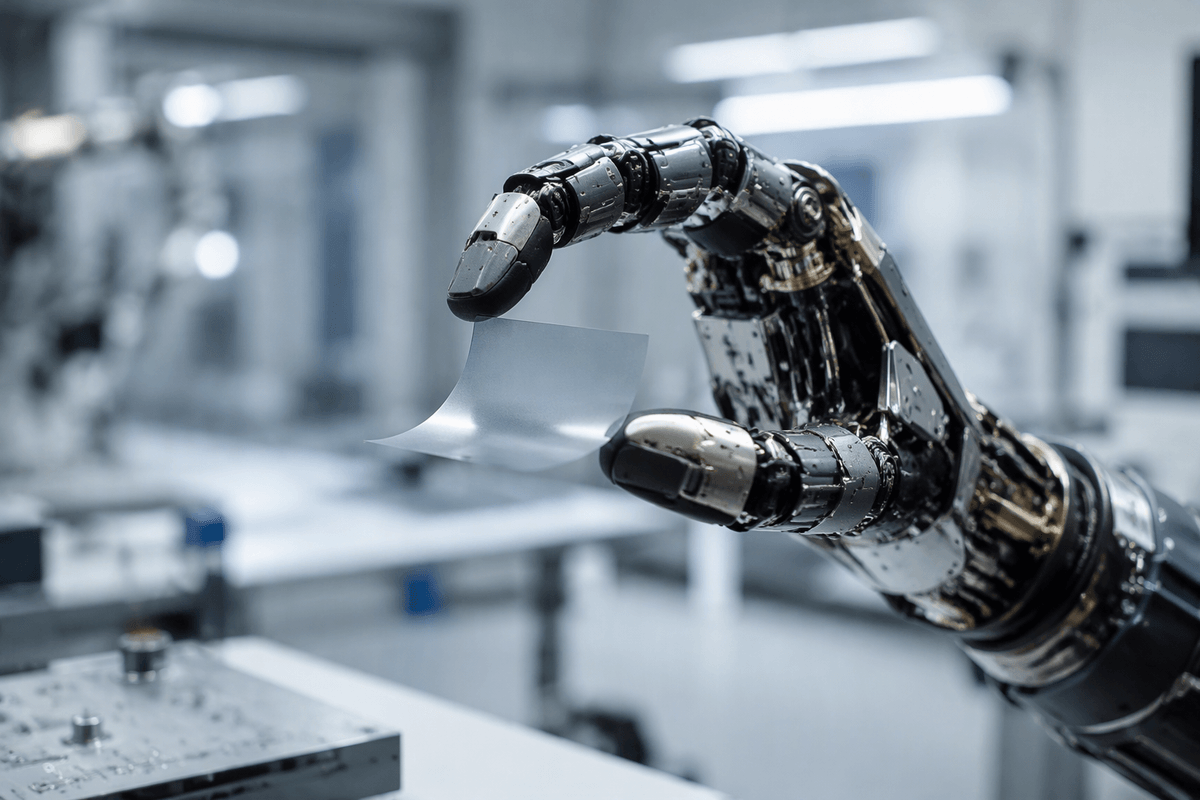
Even with a good estimate of an object’s position, a robot hand must make contact without knowing exactly how the contact will behave. Human fingers constantly adjust their shape, speed, and pressure as an object shifts. They can hold a slippery cup firmly without crushing it, or pinch a thin sheet without letting it fold away. Robotic hands need comparable control over many joints, but each added joint increases the sensing, coordination, and maintenance burden.
Strength can make this problem worse. A powerful grip may secure a rigid tool while damaging a plastic container or sending a lightweight object flying. Softer materials and compliant mechanisms reduce that risk, yet they can make the hand less precise and harder to control. The robot also needs feedback quickly enough to notice slipping, unexpected resistance, or a finger contacting the wrong surface. That feedback may come from force sensors, joint measurements, or touch-sensitive surfaces, all of which add cost and can degrade over time. The result is a trade-off between delicacy, durability, speed, and reliability—one that human hands manage through years of practice.
Everyday Environments Refuse to Stay Predictable
A robot may handle a cup correctly in a test area, then fail when the same cup sits near a wall, on a damp counter, or behind another object. Homes and workplaces contain this kind of variation constantly. Furniture shifts, floors become uneven, objects overlap, and people leave items in places no training example anticipated. Even familiar objects can behave differently when they are full, empty, warm, wet, or partly damaged.
That variability forces the robot to choose actions while information remains incomplete. It may need to move an obstacle before reaching the target, change its grip after detecting unexpected resistance, or stop when a person enters the workspace. Each adjustment requires perception, planning, and motor control to operate as one system rather than as separate skills. There is also a practical limit: a robot cannot inspect every surface, test every object, and calculate every possible response without becoming slow or expensive. Reliable operation therefore depends on deciding which uncertainties matter and recovering gracefully when the environment does not match the plan.
Why Demonstrations Do Not Equal Reliability
Polished demonstrations tend to hide the conditions that expose a robot’s weaknesses. Objects are placed carefully, lighting is controlled, and the sequence may be rehearsed until every movement starts from a predictable position. When something goes wrong, a human operator may reset the scene or step in before the problem becomes visible. Such footage shows that the robot can complete one prepared sequence, but says much less about how reliably it handles small changes to the same task.
Real reliability becomes clearer when those safeguards are removed. Testing should cover different objects, surfaces, temperatures, lighting conditions, and starting positions, with the robot expected to recognize when its original plan is no longer working. Recovery matters just as much as initial success: a stuck drawer may need to be released, a slipping object repositioned, or human assistance requested before excessive force causes damage. Meaningful evaluation therefore looks beyond successful clips to failure rates, recovery time, damage, and the supervision required. Repetition also reveals costs that a short demonstration leaves out. Nine successful attempts out of ten may sound strong, yet routine use becomes difficult to justify when the remaining failure could break an item, injure someone, or require a technician to intervene.
Humans Hide Years of Practice in Small Movements
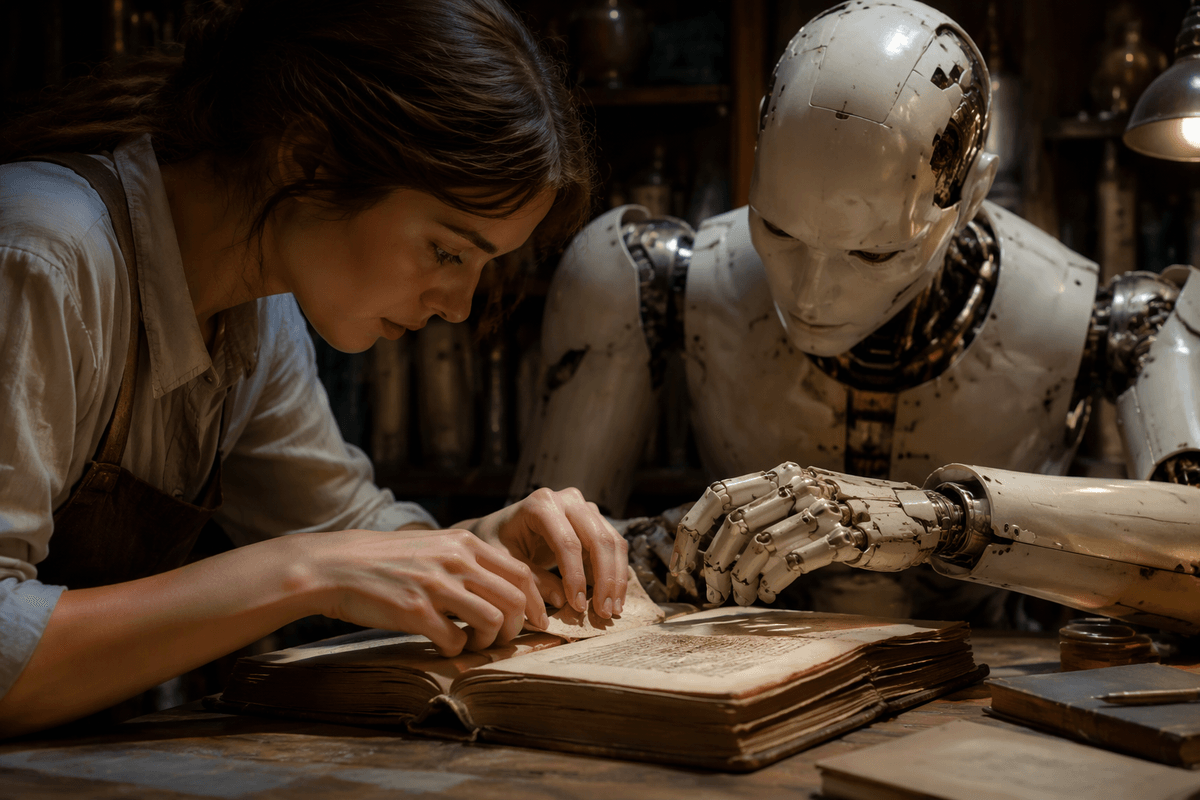
People often underestimate how much practice is hidden inside an ordinary movement. Picking up a shirt, turning a key, or separating two stuck pages involves small corrections learned through thousands of repetitions. The hand approaches from a useful angle, adjusts when the object shifts, and changes pressure without conscious calculation. When a movement fails, a person usually notices immediately and tries another approach, drawing on similar experiences.
A humanoid robot must acquire those abilities through demonstrations, programmed rules, or large amounts of trial and error. Each method has limits. Demonstrations may not cover unusual objects, while trial and error can be slow, costly, and unsafe around people or fragile equipment. The robot also has to connect general knowledge with the specific situation: a familiar drawer may require a different grip when it is overfilled or slightly misaligned. This is why apparently simple tasks expose a missing layer between movement and judgment. Walking can be trained as a repeatable pattern; manipulation depends on responding to contact, uncertainty, and consequences as they appear. Human fluency makes that adaptation look effortless, but it represents a substantial store of learned control.
Progress Will Come Through Narrower, Smarter Tasks
The most credible path forward is not asking humanoid robots to manage an entire home at once. It is choosing narrower tasks with clear boundaries, such as moving standardized bins, loading a dishwasher with known rack layouts, or handling supplies in a workplace designed for robotic access. Repeated operation in these settings can produce better data, safer recovery behaviors, and more useful measures of reliability than a single impressive demonstration.
That focus does not eliminate the underlying problems. Objects still break, sensors drift, and unusual situations require human help. It does make those limits easier to identify and improve. Progress should therefore be judged by fewer interventions, lower damage rates, and consistent performance across small changes—not by how dramatic the movement looks. Reliable general-purpose robots may emerge gradually, from dependable skills that expand only after they work outside the laboratory.