Why World Models Are Back in the Conversation
Much of today’s AI can produce convincing text, images, or code, yet still struggle with a simple practical question: what is likely to happen if it takes an action? That gap has renewed interest in world models—systems designed to learn how parts of an environment relate and change over time. Instead of responding only to the current input, an AI with such a model could estimate possible outcomes before acting.
The idea is not new. Earlier attempts often required carefully controlled environments, large amounts of task-specific data, or simulations that failed to match the messiness of the real world. The renewed attention reflects genuine progress in learning from video, building internal representations, and combining perception with planning. It also reflects familiar industry excitement. The useful question is therefore not whether world models are fashionable again, but where they can support reliable decisions—and where their predictions remain too fragile to trust.
What AI Researchers Mean by a World Model
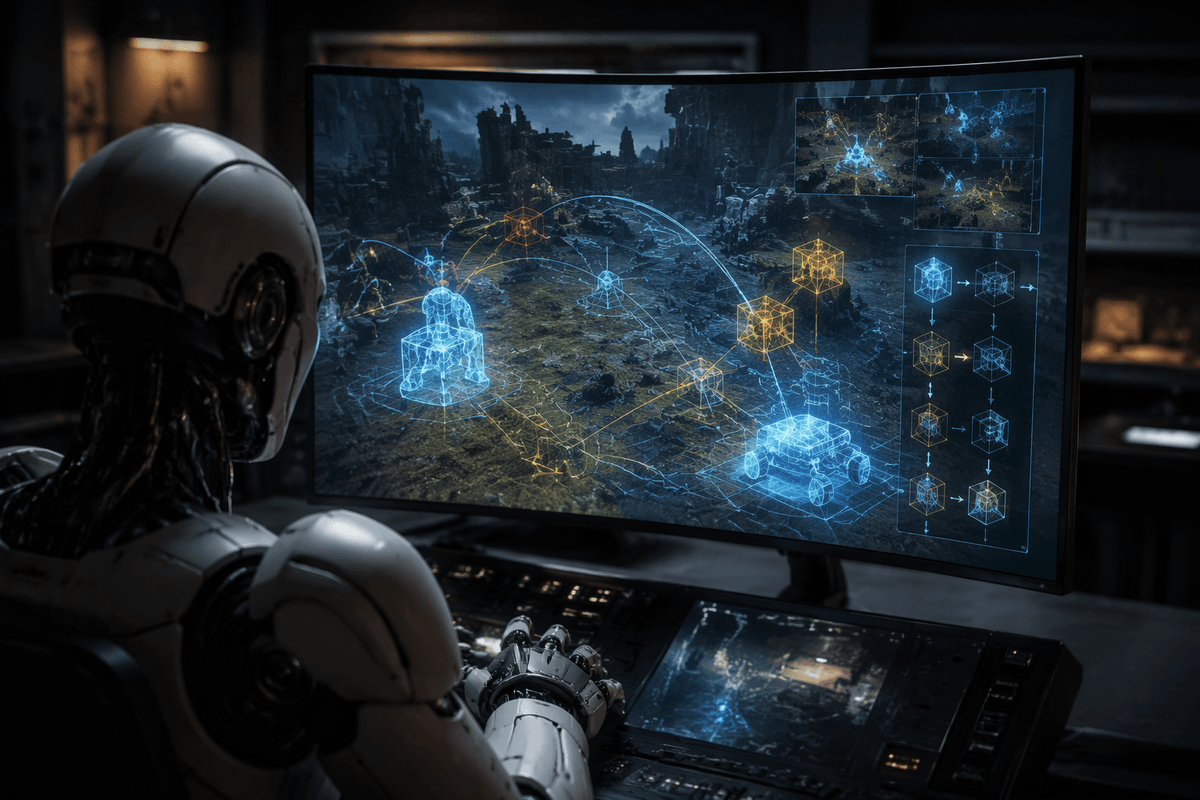
A useful starting point is to picture an AI agent playing a video game. It does not need only to recognize the screen; it needs some expectation of what will happen after it moves, turns, picks up an object, or waits. A world model is an internal representation that helps make those predictions. It may capture objects, locations, rules, cause-and-effect relationships, or patterns of change, depending on the task.
Researchers use the term broadly, but the central idea is prediction. The system observes an environment, compresses what it has learned into a workable model, and uses that model to imagine possible next states. An agent can then compare actions before taking one, rather than relying entirely on trial and error. For a robot, this might mean estimating whether a grasp will move a cup or knock it over. For a software agent, it could mean anticipating how a sequence of actions will alter a database or web page.
A world model does not need to reproduce reality perfectly. It needs to be accurate enough for the decisions at hand, under the conditions where those decisions matter.
The Earlier Promise—and Why It Fell Short
Earlier world-model projects promised a path beyond reflexive pattern matching. If an agent could learn how an environment worked, it might plan several steps ahead, practice safely in simulation, and transfer what it learned to new situations. That vision was especially attractive for robotics and autonomous systems, where collecting real-world trial-and-error data is slow, costly, and sometimes dangerous.
The difficulty was that a useful model had to get more than isolated predictions right. Small errors could compound across a long sequence: a slightly misplaced object, an overlooked obstacle, or an incorrect assumption about another agent’s behavior could make an entire plan fail. Simulated environments also tended to simplify the very details that matter in practice, creating a gap between successful training and reliable real-world performance.
Earlier systems often needed carefully designed tasks, substantial supervision, or narrow operating conditions. They could appear competent while remaining brittle outside familiar settings. The problem was not that prediction had no value; it was that building a dependable, general-purpose model of a changing world proved far harder than demonstrating one in a controlled setting.
What Changed Inside Today’s AI Systems
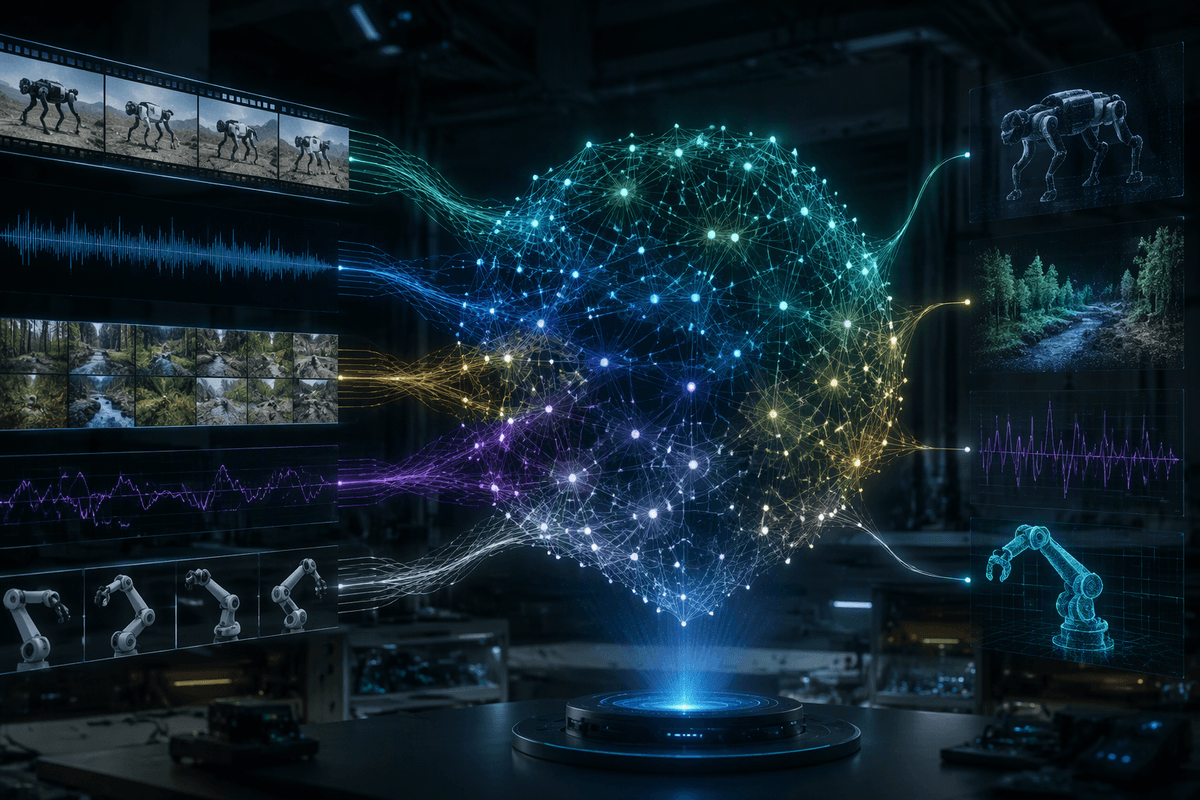
The biggest change is the amount and variety of data today’s systems can absorb. Modern models can learn from video, language, images, sensor readings, and action records, giving them more opportunities to connect observations with consequences. A video model, for example, may learn that an object continues moving when pushed, while language can add information about goals, rules, and likely human behavior. These signals do not automatically produce a coherent world model, but they provide richer material than many earlier systems had.
Computing and training methods have also improved. Large neural networks can form useful internal representations without being taught every object or rule by hand, while reinforcement learning and simulation allow agents to test possible actions at scale. Some systems can now combine perception, prediction, and planning in one workflow instead of treating them as separate problems.
That progress changes the starting point, not the final result. Better representations may support more flexible predictions, but they still depend on the quality of their data and feedback. Rare events, hidden variables, and unfamiliar physical conditions can expose weaknesses quickly, especially when mistakes carry real costs.
Where World Models Could Matter First
The first useful applications are likely to be environments with clear rules, repeated tasks, and feedback that arrives quickly. In robotics, a world model could help a warehouse system predict how a package will shift when lifted, or choose a safer path around people and equipment. In software, an agent could model the likely effects of editing a file, changing a setting, or submitting a transaction before it acts. Games and simulations remain valuable because they provide cheap, repeatable environments where predictions can be tested without risking hardware, money, or safety.
These systems may also help with planning in logistics, industrial control, and scientific experiments, where decisions unfold over several steps and the environment can be partly observed. Their advantage would not be perfect foresight. It would be the ability to compare options, detect likely failures, and revise a plan as new information arrives.
The early success may depend on narrow boundaries. A model trained around warehouse shelves may not understand a construction site, and a software agent may misjudge an unusual system state. World models are therefore most promising first where the environment can be measured, tested, and limited before broader deployment.
The Hard Problems No Comeback Solves
A robot can make a reasonable prediction and still fail when the situation contains something it has never seen. A person steps into its path, a surface behaves differently than expected, or an object is heavier than its appearance suggests. These cases expose a basic limit: world models learn from available evidence, so they may be least reliable when conditions change, information is incomplete, or rare events matter most.
Long-term planning creates another problem. Even small prediction errors can compound across many steps, turning a plausible imagined sequence into a poor real-world decision. More capable models may also require substantial computing power, continuous data collection, and carefully designed feedback. Those costs matter when an application must respond quickly, operate on limited hardware, or justify every mistake. Safety adds a further constraint. An agent that is uncertain about the world does not always recognize its own uncertainty, and a confident but incorrect plan can be more dangerous than a simple refusal.
There is also no guarantee that a model’s internal representation matches the explanation people need. A system may predict outcomes effectively while offering little insight into why it chose an action. That makes testing, debugging, and assigning responsibility difficult—especially in settings where reliability matters more than impressive demonstrations.
A More Practical Way to Judge the Revival
The revival is best judged by what a system can do under realistic conditions, not by how convincing its demonstrations look. Useful tests should ask whether it predicts consequences accurately, recognizes uncertainty, adapts when the environment changes, and improves decisions compared with simpler methods. They should also measure performance over extended sequences, where small mistakes can accumulate.
This standard leads to a measured conclusion. World models may become valuable components for agents that must plan, act, and revise their behavior, especially in structured environments with reliable feedback. They are not yet universal simulations of reality, and progress will remain uneven. The practical question is whether a model makes costly decisions safer or more effective. When it does, the revival represents meaningful engineering progress; when it only produces impressive predictions, it is mostly renewed enthusiasm.